Maplewood Counseling
Select Page

Marriage in Crisis ?

Marriage In Crisis?

Need Immediate Help?

Contact Maplewoood Counseling

Is Your Marriage in Crisis?

Are you and your partner going through a crisis in your relationship? Scared to death you won’t be able to repair what went wrong.  Maybe you commented adultery or your spouse have been having an affair. Or you had another serious rupture in the marriage.

There are so many challenges that can bring couples to the brink. Whether you are coping with something like inFidelity, which includes an emotional affairs and online cheating, or other major issues, A crisis can cause tremendous fear.

There probably are many things that got you to this point, but what to do next. Questions you ask might be “can we save this marriage”, “should we divorce” or “ What will happen to our kids if we can’t make it”?

One of the major reasons couples need immediate help due to a crisis is because of infidelity. Most of the time it isn’t because someone came forward and told their spouse or partner, but because they found out in other ways. Even if you come forward, the initial response is shock and devastation. What happens after that varies with each person and couple.

If you are a couple in crisis and need immediate help to figure things out, get in touch

Urgent Relationship Support for Couples in Crisis | Maplewood

Urgent Relationship Support for Couples in Crisis | Maplewood

Emergency Marriage Counseling: Immediate Support for Couples in Crisis

At Maplewood Counseling, we provide inclusive care for people of all races, cultures, and backgrounds, including interfaith, interracial, BIPOC, LGBTQIA+, and blended families. Our therapists bring lived experiences and specialized training to create a safe, affirming space for all.

\Emergency Marriage Counseling: Immediate Support for Couples in Crisis

Finding Stability When Your Relationship Is at a Breaking Point

When a relationship reaches a crisis point, it can feel like the entire world is falling apart. The shock of discovering an affair, the constant threat of divorce, or a cycle of painful arguments can leave you feeling lost and overwhelmed. The pain is immediate, and the future feels uncertain.

In these moments, you need help now, not weeks from now. Urgent relationship support offers a lifeline. It provides a safe, neutral space to de-escalate the immediate crisis, stabilize your connection, and find a clear path forward. At Maplewood Counseling, we provide inclusive, affirming care for all couples, honoring every race, culture, and background.

Is Crisis Counseling Right for You?

A relationship crisis often feels like a storm that appears without warning, leaving you scrambling for shelter. You might be questioning if your partnership can survive, or if it is even worth saving.

Immediate support may be necessary if:

  • Infidelity has just been discovered. The fresh pain of betrayal is raw, and you are unsure if trust can ever be restored.
  • The word “divorce” has been mentioned. One partner is considering leaving, and you need to intervene before a permanent decision is made.
  • Conflicts have become constant or destructive. Arguments escalate quickly, leaving you feeling emotionally drained, unheard, or even unsafe.
  • A major life event has driven a wedge between you. The loss of a job, a death in the family, or a health crisis has shattered your sense of teamwork.
  • You feel completely hopeless. You still love each other, but you have no idea how to stop the cycle of hurt.

If you are hanging on by a thread, it is time to reach out. We are here to help you navigate this difficult time with compassion and specialized care.

When Your Partnership Hits a Wall

Even the strongest relationships can face unexpected challenges that threaten their very foundation. Crisis counseling for couples is designed to address these critical issues head-on, providing immediate relief and a plan for the future.

Navigating Sudden Loss and Grief

Grief can be an incredibly isolating experience. When partners face a profound loss, they often grieve in different ways. This can lead to silence, misunderstandings, and emotional distance. Urgent support helps bridge that gap, creating a space for you to share your pain and lean on each other through the darkness.

Healing After Infidelity

The discovery of an affair is a traumatic event. The betrayed partner often grapples with overwhelming doubt and pain, while the unfaithful partner may struggle with immense guilt and shame. Immediate intervention provides a structured environment to process the initial shock and begin the long journey of rebuilding trust.

Breaking the Cycle of High Conflict

Are you having the same fight over and over, with no resolution in sight? When communication breaks down completely, every conversation can feel like a battle. Urgent counseling helps de-escalate the tension, teaching you practical strategies to stop the fighting and start hearing each other again.

Restoring Intimacy and Connection

Sometimes a crisis isn’t a loud explosion but a quiet, slow erosion of connection. If you feel more like roommates living parallel lives, or if intimacy has disappeared entirely, therapy can help you uncover the barriers to closeness and reignite the emotional bond you once shared.

Asking for Help Is a Sign of Strength

It takes tremendous courage to admit that your relationship is in trouble. Many couples delay seeking help because they fear it means they have failed or that it signals the end is near.

The opposite is true. Seeking support in a moment of crisis is a proactive, powerful step. It demonstrates that you value your partnership enough to fight for it. It is not about admitting defeat; it is about gathering the right tools and guidance to heal. Don’t wait until the damage feels irreparable.

Flexible Support When You Need It Most

We understand that a relationship crisis doesn’t operate on a 9-to-5 schedule. When your partnership is on the line, waiting weeks for an appointment can feel like an eternity. We are committed to providing timely and flexible care.

  • Extended Sessions: We offer intensive, longer sessions for couples who need more time to work through complex and painful issues in one sitting.
  • Urgent Availability: We do our best to accommodate same-day or next-day appointments to provide immediate relief for couples in distress.
  • Virtual or In-Person: You can choose the setting that feels most comfortable and accessible for you and your partner.

Frequently Asked Questions About Crisis Counseling

What is the difference between crisis counseling and regular couples therapy?

Think of urgent support as “triage” for your relationship. The primary focus is on immediate stabilization, de-escalating the current crisis, and creating a safety plan. Regular couples therapy typically involves weekly sessions focused on long-term growth and changing deep-seated patterns. Crisis intervention stops the bleeding so you can eventually move into the deeper work of healing.

Can immediate counseling save our relationship after an affair?

While no outcome can be guaranteed, getting help immediately after infidelity is a critical first step. It provides a safe container to manage the initial shock, anger, and grief. Many couples do survive and even build a stronger relationship after an affair, but it requires a commitment from both partners to do the hard work of rebuilding.

Do we both have to be willing to attend?

Ideally, yes. The most effective work happens when both partners are present. However, if your partner is hesitant or refuses to come, you can still benefit from individual support. A therapist can help you learn how to navigate the crisis, manage your own reactions, and communicate more effectively during this volatile time.

What if we decide to separate during counseling?

Sometimes, the healthiest outcome is a respectful separation. If you and your partner decide to part ways, therapy can help you navigate that transition with dignity and minimal conflict. This is especially important if children are involved. We provide a neutral space to discuss next steps without the conversation devolving into a painful fight.

Is our session confidential?

Absolutely. We adhere to the strictest professional and ethical standards of confidentiality. Your privacy is paramount. This allows you to speak openly and honestly about your fears, struggles, and pain without judgment.


Don’t wait until it’s too late. If your relationship is in crisis, immediate support can make the difference between breaking up and breaking through.

Helpful Resources 

Emergency Marriage Counseling NJ: Is It Too Late?

Emergency Marriage Counseling NJ: Is It Too Late?

Emergency Counseling NJ: Finding Clarity When Your Marriage Is in Crisis


Emergency Marriage Counseling NJ: Is It Too Late?

Is my marriage over? Can we still fix this? Or is it time to let go?

These are some of the heaviest, most painful questions you will ever ask yourself. When you are in the middle of a relationship crisis—whether it’s the shock of discovering an affair, the exhaustion of fighting for years, or the sudden realization that you feel like strangers—it can feel like the ground is crumbling beneath you.

At Maplewood Counseling, we know that when you are in this space, you don’t just need advice; you need a lifeline. You might feel panicked, hopeless, or numb. You might be desperate to save the relationship, or you might be looking for permission to leave.

Emergency marriage counseling isn’t just about “fixing” things instantly. It is about slowing down the crisis so you can breathe, think, and make decisions that honor your future—whatever that future looks like.

When to Seek Emergency Counseling

Most couples wait an average of six years after problems start before seeking help. But sometimes, a specific event or realization pushes a relationship to the breaking point. You might need urgent support if:

  • You’ve discovered infidelity: The breach of trust feels insurmountable, and you don’t know if you can (or should) stay.
  • A separation is on the table: One partner has asked for a divorce or suggested a trial separation, and you are scrambling to understand what that means.
  • The fighting has become toxic: Arguments are escalating to a point where you feel unsafe, emotionally battered, or constantly on edge.
  • You feel totally disconnected: You are living parallel lives, and the silence between you feels louder than any argument.
  • You’ve lost hope: You’ve tried everything you can think of, and nothing has worked. You feel like giving up, but a part of you is terrified of the finality of divorce.

How Emergency Counseling Works

When you are in crisis, traditional weekly therapy might feel too slow. Emergency counseling is designed to be more intensive and focused.

1. Stopping the Bleeding

The first goal is de-escalation. We create a safe, neutral space where you can stop the cycle of attack and defense. We help you manage immediate volatility so you can actually hear each other, often for the first time in a long time.

2. Assessing the Damage

We take a hard, honest look at the relationship. What is really broken? Is it a communication issue, a lack of intimacy, or deep-seated resentment? We help you understand the root causes of the crisis, not just the symptoms.

3. Determining the Direction

Not every marriage can—or should—be saved. Emergency counseling helps you gain clarity. We guide you through the difficult process of deciding whether to commit to the hard work of rebuilding or to separate with dignity and respect.

Practical Steps You Can Take Right Now

If you can’t get into a session immediately, here are a few steps to help manage the crisis today:

  • Hit the Pause Button: If a conversation is turning into a shouting match, agree to take a timeout. Walk away for 20 minutes to let your nervous system calm down before returning.
  • Avoid Big Decisions in High Emotion: Don’t file for divorce, move out, or post on social media while you are in a state of panic or rage. Give yourself 24 hours to cool off.
  • Focus on “I” Statements: Instead of saying “You ruined this,” try “I feel hurt and scared when this happens.” It lowers defensiveness and invites empathy.
  • Prioritize Self-Care: It sounds cliché, but you cannot navigate a crisis on an empty tank. Eat, sleep, and reach out to a trusted friend for individual support.

Inclusive Support for All Couples

Crisis doesn’t look the same for everyone. At Maplewood Counseling, we provide inclusive care for people of all races, cultures, and backgrounds, including interfaith, interracial, BIPOC, LGBTQIA+, and blended families.

Our therapists bring lived experiences and specialized training to create a safe, affirming space for all. Whether you are navigating cultural differences in your marriage, dealing with external family pressures, or facing challenges unique to LGBTQIA+ relationships, we are here to support you without judgment.

Frequently Asked Questions About Marriage Crisis

Q: Can emergency counseling really save a marriage after an affair?
A: Yes, it is possible. Infidelity is a massive trauma to a relationship, but many couples do recover and build a stronger, more honest marriage on the other side. However, it requires total transparency from the unfaithful partner and a willingness to heal from the betrayed partner. It is hard work, but you don’t have to do it alone.

Q: What if my spouse refuses to come to counseling?
A: This is a common and painful situation. You cannot force your partner to attend, but you can come for individual counseling. We can help you clarify your own feelings, set boundaries, and decide how you want to move forward, regardless of your partner’s participation. Sometimes, seeing one partner make changes inspires the other to join later.

Q: Is “staying together for the kids” a good idea?
A: It is a complex question. While stability is important for children, living in a home filled with chronic conflict, coldness, or resentment can be more damaging than a healthy separation. We help parents weigh these factors carefully, focusing on the long-term emotional health of the entire family.

Q: How quickly can we be seen?
A: We understand that when you are in crisis, you need help now. We prioritize emergency requests and do our best to schedule you with a therapist as soon as possible, often within a few days. We also offer virtual sessions to make scheduling easier.

Q: Does going to counseling mean we are failing?
A: Absolutely not. Seeking help is a sign of strength and commitment. It means you value your relationship enough to fight for it, or at least enough to give it the respect of a thoughtful examination. Ignoring the problem is usually where the real “failure” lies; facing it takes courage.

You Don’t Have to Navigate This Storm Alone

If you are asking “Is my marriage over?”, you are already in a lonely, frightening place. But you don’t have to stay there. Whether the path forward leads to reconciliation or separation, clarity and peace are possible.

Let us help you find your footing.

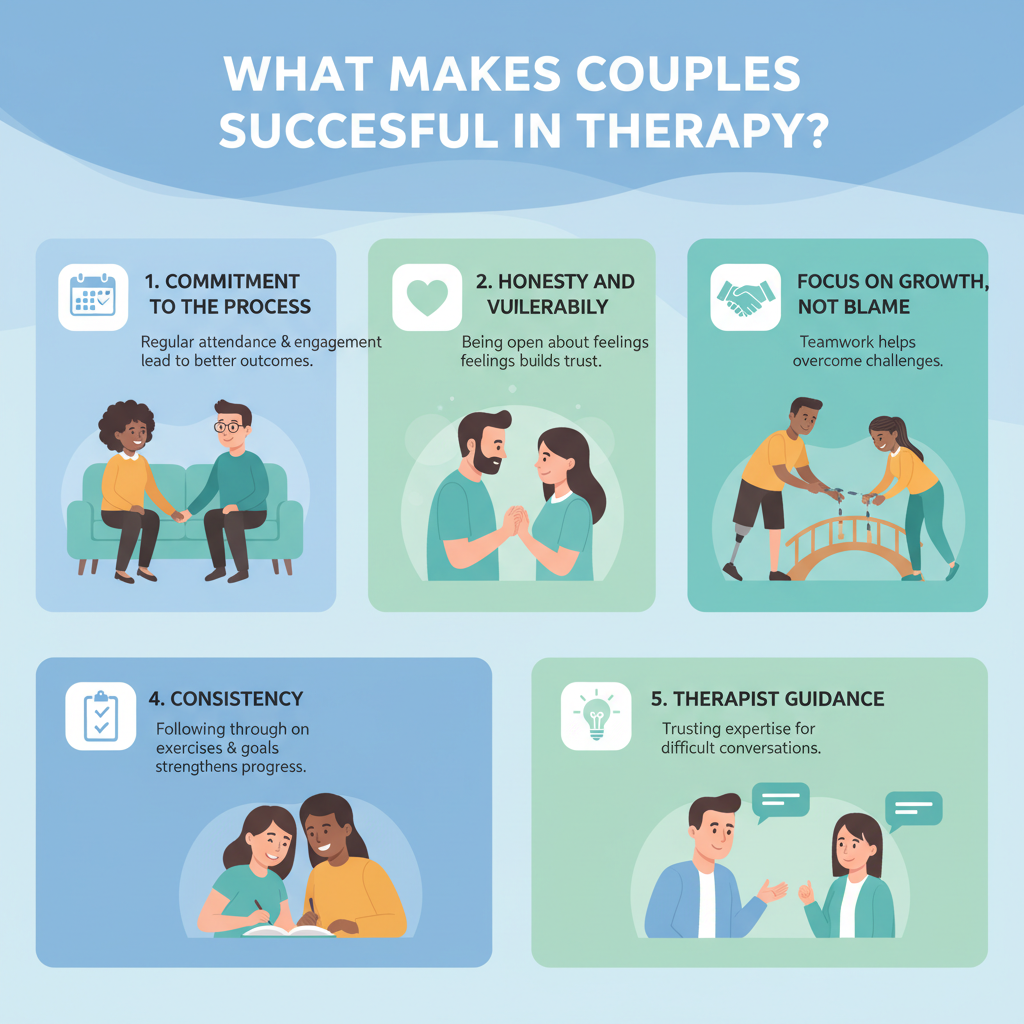
What Makes Couples Thrive in Therapy? Success in Counseling

What Makes Couples Thrive in Therapy? Success in Counseling

What Makes Couples Thrive in Counseling? Key Ingredients for Success


What Makes Couples Thrive in Therapy? Success in Counseling

By Debra Feinberg, LCSW, Robert Jenkins, LCSW (Reviewed by Senior Level Therapists)

Every relationship journeys through challenges, but have you ever wondered why some couples emerge from therapy stronger and more deeply connected, while others find it hard to create real change? Not all couples therapy journeys look the same—there are certain mindsets and habits that set successful couples apart. If you and your partner are considering counseling, understanding these factors can help you make the most of your experience.

Success Story:
“We struggled for years to communicate and found ourselves drifting apart after having kids. Maplewood Counseling gave us the support, understanding, and tools we needed to reconnect. We now listen to each other in a way we never did before, and our family is stronger for it.” — J. & N., Maplewood, NJ

Learn more about our approach to couples therapy

At Maplewood Counseling, we want you to know that personal growth—and healing together—is possible when both partners are invested. We offer a safe, non-judgmental space, but it’s the joint commitment to the process that turns this support into real progress. Below, discover what makes some couples especially successful in counseling and how you can apply these practices to your own relationship.


The Key Success Factors: What Sets Succeeding Couples Apart?

1. Commitment to the Process

The most successful couples approach therapy as a team effort, attending sessions regularly and being open to the journey—even when it gets uncomfortable. Change doesn’t happen overnight, but persistent effort is a game-changer.

  • Therapist Insight:
    “Couples who show up, even when it’s hard, demonstrate to each other that the relationship is a priority,” shares Our Therapists. “These are the pairs who often experience the most meaningful progress.”

2. Honesty and Vulnerability

Real growth happens when both partners are honest—not just about the relationship, but about their own feelings, responsibility, and needs. Vulnerability paves the way for deeper understanding and genuine reconnection.

  • Therapist Insight:
    “The willingness to share fears, doubts, or even moments of shame opens the door to compassion and empathy,” says James O’Neill, LCSW.

3. Consistency

Consistent attendance and follow-through—from showing up to sessions on time to completing take-home exercises—keep momentum strong. Couples who treat therapy like building a new habit get the most out of the process.

  • Practical Tip:
    Schedule sessions at times you can consistently attend and set reminders to complete any in-between session tasks together.

4. Focus on Growth, Not Blame

Progress accelerates when the focus shifts from “Who’s at fault?” to “How can we both grow?” Successful couples use what’s revealed in therapy to strengthen their partnership, not to assign blame or revisit old fights.

  • Therapist Insight:
    “Healing is about working toward mutual understanding, not keeping score. The most resilient couples remember it’s the two of you against the problem, not each other,” explains Debra Feinberg, LSCW.

What Makes Couples Thrive in Therapy? Factors for Success in Couples Counseling


Practical Tips: How to Maximize Your Success in Couples Counseling

  • Set Clear, Shared Goals: Before your first session, discuss what each of you hopes to achieve and revisit these goals regularly. See what to expect in a session
  • Prepare to Be Uncomfortable: Sometimes sessions can surface old wounds. Remind yourself that discomfort often signals growth.
  • Practice Between Sessions: Try out communication tools or empathy exercises at home, not just in therapy.
  • Ask for Feedback: Don’t be afraid to ask your therapist for ideas or clarification.
  • Celebrate Small Wins: Acknowledge each step forward, no matter how small—it fuels motivation to keep growing.

Addressing Common Challenges

Even couples committed to change will hit stumbling blocks along the way. Here’s how to work through the most common ones:

  • One Partner Feels Less Engaged:
    Start with an open conversation about what each of you wants from therapy. Sometimes sharing anxieties can help bring more buy-in.
  • Struggling with Vulnerability:
    It’s normal to feel nervous about sharing. Remember, therapy is confidential and judgment-free.
  • Doubts About Progress:
    Growth is often gradual and non-linear. Regularly revisit your goals with your therapist to check in on your progress together.

Quick Self-Assessment: Are You Ready for Therapy?

Take a moment with your partner to reflect:

  • Are you both willing to attend sessions and be open to new ideas?
  • Can you commit to small changes, even if they feel awkward at first?
  • Are you ready to place growth above winning past arguments?

If you answered “yes,” you’re already on the path to successful couples therapy.

Frequently Asked Questions About Making the Most of Couples Counseling

What actually happens in couples counseling?
Therapists facilitate honest, empathetic conversations, help you recognize and shift negative dynamics, and guide you toward more constructive patterns.
See what to expect in a session

How long before we see results?
Each relationship is unique. Sometimes shifts happen in a few sessions, while bigger patterns may take months. The key is consistency.

What if my partner is hesitant to participate?
It’s normal for one person to need more time. Start by discussing shared goals and listen to each other’s hopes and concerns. If you need support, our therapists are experienced in helping both partners feel heard and respected.

Can therapy help after infidelity or major betrayal?
Absolutely—if both partners are willing to work through the pain honestly and with an open mind, therapy can lay the groundwork for rebuilding trust.
Learn how infidelity counseling works

Are virtual sessions as effective as in-person?
For many couples, yes. We offer secure, flexible virtual sessions so you can prioritize growth from anywhere.


Meet Our Therapists

At Maplewood Counseling, our experienced team is dedicated to empowering each couple’s unique journey.

Meet our full team


Flexible Therapy Options for Northern New Jersey Couples

We recognize that each partnership has different needs:

  • In-person sessions in the calm of our Maplewood, NJ office
  • Virtual therapy for clients in Short Hills, Newark, Millburn, Summit, Union, Springfield, and South Orange
  • Evening and weekend appointments for busy schedules

No matter your location or lifestyle, we make quality support accessible.


Ready to Invest in Your Relationship’s Success?

You have the power to make your relationship stronger—starting today. Embracing therapy as a team, staying honest and open, showing up consistently, and focusing on mutual growth are steps that set you apart.

Let us support you in building a relationship founded on understanding, trust, and lasting love.

Helpful Resources 

Relationship Therapy SOMA – Couples Counseling Essex County

Relationship Therapy SOMA – Couples Counseling Essex County

Relationship Therapy in SOMA: Reignite Your Emotional Bond


Relationship Therapy SOMA – Couples Counseling Essex County

By Debra Feinberg, LCSW, Robert Jenkins, LCSW (Reviewed by Senior Level Therapists)

Have you ever found yourself sitting across from your partner, wondering how a simple conversation suddenly shifted into a heavy, uncomfortable silence? Do you ever feel like you are speaking two completely different languages, even though you share the same life? It is completely normal to experience periods of disconnect in a committed relationship. Whether you are navigating the early years of your partnership or looking back on decades of shared memories, every couple encounters unique hurdles.

You do not have to wait for a breaking point to seek support. Relationship therapy is not just a lifeline for couples in crisis; it is a powerful tool for growth, understanding, and profound emotional connection. For couples living in South Orange, Maplewood, and the surrounding areas, finding the right guidance can transform your partnership.

In this guide, we will explore how couples counseling in Essex County can help you and your partner navigate life’s transitions. You will discover actionable insights to deepen your bond, learn how to turn conflicts into opportunities for empathy, and see how accessible relationship therapy in SOMA can empower your partnership.

Navigating Every Stage of Your Partnership

Many people mistakenly believe that therapy is only for marriages on the brink of divorce. However, relationship therapy serves as a vital resource for couples at absolutely any stage of their journey together. Are you newly committed and looking to build a rock-solid foundation? Or have you been together for years and simply want to reignite the spark that brought you together?

Building a Foundation for New Couples

When you first commit to a life together, you bring two distinct histories, communication styles, and sets of expectations into one shared space. This merging of lives is beautiful, but it can also reveal unexpected friction. Early-stage couples counseling helps you proactively establish healthy boundaries. You learn to communicate your needs clearly and compassionately before minor misunderstandings have the chance to grow into deep-seated resentments.

Weathering Storms in Long-Term Relationships

For couples who have been together for many years, the challenges often look different. You might be navigating major life transitions, such as raising children, blending families, managing career shifts, or adjusting to an empty nest. Over time, the daily grind can slowly erode intimacy, leaving you feeling more like roommates than romantic partners. Relationship therapy provides a safe, non-judgmental environment to pause, reflect, and rediscover the person you fell in love with.

Actionable Insights to Deepen Your Emotional Connection

While professional guidance is incredibly valuable, there are steps you can take right now to begin fostering a stronger, more resilient partnership. Here are a few actionable insights to help you start transforming your relationship dynamics today.

Master the Art of Intentional Listening

How often do we listen simply to formulate our next response? True communication requires intentional, active listening. The next time your partner shares a frustration, try putting away all distractions. Maintain gentle eye contact and focus entirely on understanding their perspective. Reflect back what you hear by saying, “It sounds like you are feeling really overwhelmed right now.” This simple act of validation helps your partner feel truly seen and understood, which instantly diffuses tension.

Transform Conflict into Deeper Understanding

Disagreements are an inevitable part of sharing your life with someone. The goal is not to eliminate conflict, but to change how you handle it. When an argument arises, try to shift your mindset from “you versus me” to “us versus the problem.” Approach the issue with genuine curiosity rather than immediate defensiveness. Ask open-ended questions like, “Can you help me understand why this feels so important to you?” This empathy-building approach turns a potential fight into a bridge for deeper emotional intimacy.

Prioritize Emotional and Physical Intimacy

Life gets busy, and intimacy is often the first thing to fall off the priority list. Reigniting your bond requires deliberate effort. Carve out dedicated time for one another that does not involve discussing finances, household chores, or logistics. Small, consistent acts of affection—a warm embrace, holding hands, or a lingering kiss—send powerful signals of safety and love to your partner’s nervous system.

Tailored Relationship Therapy in SOMA

Living in the vibrant communities of South Orange and Maplewood offers a wonderful quality of life, but it also comes with its own unique set of pressures. Many local couples juggle demanding careers, long commutes, and the intense responsibilities of raising a family. This constant juggling act leaves very little energy for nurturing a romantic partnership.

Seeking relationship therapy in SOMA means partnering with professionals who intimately understand the specific stressors facing families in this area. We provide a sanctuary away from the noise of your daily life. Our therapists specialize in making both partners feel comfortable, ensuring everyone feels heard and respected. We celebrate cultural diversity and offer an inclusive space where couples of all backgrounds and identities can explore their challenges safely.

Whether you are dealing with communication breakdowns, navigating the painful aftermath of a betrayal, or simply feeling emotionally distant, we are here to support you. We help you identify the root causes of your disconnect and provide you with practical, effective tools to rebuild trust and harmony.


Frequently Asked Questions About Relationship Therapy

What are the main benefits of relationship therapy?

Relationship therapy offers a confidential and supportive space for couples to understand each other more fully, improve communication, resolve recurring issues, and strengthen emotional and physical intimacy. Whether you are starting your journey together or have been partners for years, therapy helps you build skills that nurture your connection and foster long-term relationship satisfaction.

How does couples counseling actually work?

Counseling sessions typically involve both partners meeting with a trained therapist—either in-person or virtually. Together, you’ll explore patterns in your relationship, uncover individual needs, and develop strategies for navigating conflict and misunderstandings. Therapists offer an unbiased perspective while guiding conversations to help you both feel heard and valued.

What happens during a typical session?

Each session is unique and shaped by your specific concerns and goals as a couple. Most sessions include open discussions about challenges you’re facing, active listening exercises, and actionable steps you can use between sessions for improved communication. Therapy is a collaborative process, and your therapist will help create a space where both of you feel comfortable sharing your experiences and ideas.

Is relationship therapy only for couples in crisis?

Not at all. Many couples seek therapy proactively to enhance their connection, address small issues before they become bigger problems, or simply to grow together as partners. Therapy supports couples at any stage of their relationship, from newly committed to long-term partnerships.

Can virtual therapy be as effective as in-person sessions?

Absolutely. Many local couples choose virtual sessions for convenience, comfort, and accessibility—especially when busy schedules make in-person visits difficult. Virtual therapy is designed to be just as interactive, confidential, and impactful as meeting face-to-face.

How do we get started?

Beginning therapy is as simple as reaching out to schedule your first consultation. Our team will answer any questions, help you choose the option that fits your needs, and guide you through the process so you feel supported every step of the way.

Empower Your Partnership Today

Do you want to experience a relationship where you feel completely supported, understood, and cherished? Moving away from destructive conflict patterns and toward a secure, loving connection takes courage, but you do not have to do it alone.

Every relationship has its unique challenges, and we are here to support yours with a tailored approach. By investing in relationship therapy, you are choosing to prioritize your shared future. You are choosing to learn the skills necessary to resolve conflicts constructively, reignite your emotional bond, and navigate life’s inevitable changes as a united front.

If you are ready to transform your relationship and experience a deeper, more fulfilling connection, we invite you to take the next step. Reach out to Maplewood Counseling today to schedule your initial session. Whether you prefer the warmth of an in-person meeting or the convenience of virtual therapy, we are ready to guide you toward a more joyful and harmonious partnership. Let us help you empower your relationship for the years to come.

Helpful Resources

When You or Your Spouse Wants a Divorce

Your or Spouse Wants a Divorce?

Marriage Counseling NJ

Should We Separate?

Contact Maplewoood Counseling

Spouse Wants Divorce? Partner Wants Out?

What to do when you or your spouse wants out of your marriage or relationship.

Is this you?

    • Spouse wants divorce – Your wife or husband saying they want to separate.
    • Things have been bad for a long time and you’re at a critical point in the relationship
    • There’s been a recent event like an affair that has really been a painful wake up call
    • Your husband or wife has been so neglectful, verbally or emotionally (* physically) abusive over the years that you just have lost all hope
    • You developed feelings for someone else – maybe through an emotional affair or sexual infidelity and you’re not sure what to do
    • Do you need help figuring out your next step is a couple if you can’t stay together

* physical abuse is the fastest way to destroy your relationship and you will have to do individual therapy since therapists cannot work with a couple that have a pattern of physical, domestic violence and or spousal abuse since safety is a priority.

If you need help figuring out if your relationship can survive or if you have to go your separate ways, call or email us and let us know how we can help you.

Contact Maplewoood Counseling

Struggling in Your Marriage?