Can we get back together after splitting up? Did you go through a rough time in your relationship or marriage and lose hope things could work out? Are you wondering after a few weeks, months or longer if you can make it work?
Sometimes breaking up means you have to move on and start over. It might mean a divorce if you were married or a break-up if you were partnered. It can be extremely painful to let go and accept things you cannot change because you cannot change another person. Are you at a point where you’re wondering if taking a second look at the problems with a professional is worth it? Are you both wondering and committed to at least trying to understand how you ended up where you did?
Effective marriage or relationship counseling can help you take a good look at your own part and the problems and what happen when you both trigger each other’s issues. Therapy can also help you both really understand the types of things that will help you improve the way you handle things when you get upset.
All couples have to deal with conflict – that’s not the problem. It’s how you handle things when they get difficult. Do you respond when he or she is upset or react? Do you listen – really listen? Couples that can learn the skills to handle their “ruptures” and repair conflict will have a much better chance of staying together. It’s all about what happens when there is a rupture – from the smallest to the biggest events in a relationship, it’s all how you both handle one another to resolve your issues.
Are you wondering if therapy can help you get back together? Get in touch and let us know how we can help.
Every relationship journeys through challenges, but have you ever wondered why some couples emerge from therapy stronger and more deeply connected, while others find it hard to create real change? Not all couples therapy journeys look the same—there are certain mindsets and habits that set successful couples apart. If you and your partner are considering counseling, understanding these factors can help you make the most of your experience.
Success Story: “We struggled for years to communicate and found ourselves drifting apart after having kids. Maplewood Counseling gave us the support, understanding, and tools we needed to reconnect. We now listen to each other in a way we never did before, and our family is stronger for it.” — J. & N., Maplewood, NJ
At Maplewood Counseling, we want you to know that personal growth—and healing together—is possible when both partners are invested. We offer a safe, non-judgmental space, but it’s the joint commitment to the process that turns this support into real progress. Below, discover what makes some couples especially successful in counseling and how you can apply these practices to your own relationship.
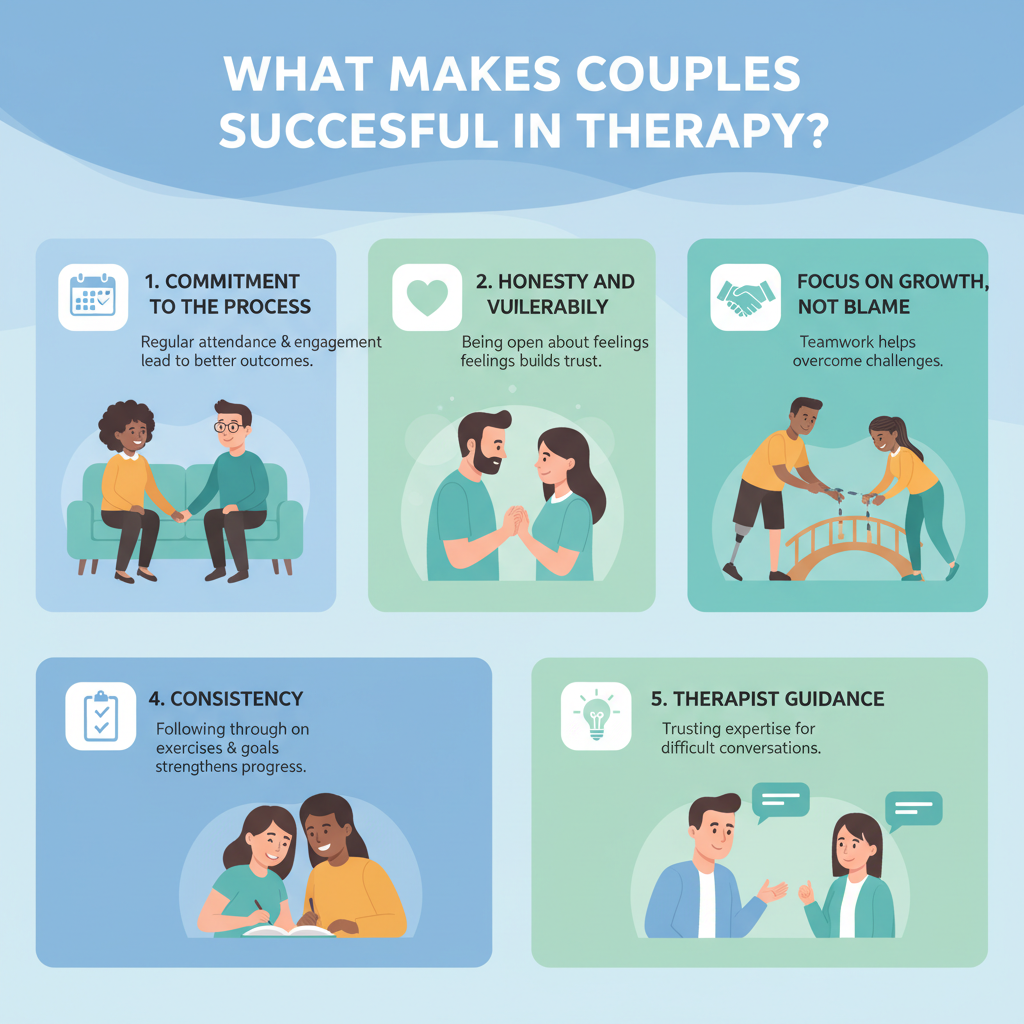
The Key Success Factors: What Sets Succeeding Couples Apart?
1. Commitment to the Process
The most successful couples approach therapy as a team effort, attending sessions regularly and being open to the journey—even when it gets uncomfortable. Change doesn’t happen overnight, but persistent effort is a game-changer.
Therapist Insight: “Couples who show up, even when it’s hard, demonstrate to each other that the relationship is a priority,” shares Our Therapists. “These are the pairs who often experience the most meaningful progress.”
2. Honesty and Vulnerability
Real growth happens when both partners are honest—not just about the relationship, but about their own feelings, responsibility, and needs. Vulnerability paves the way for deeper understanding and genuine reconnection.
Therapist Insight: “The willingness to share fears, doubts, or even moments of shame opens the door to compassion and empathy,” says James O’Neill, LCSW.
3. Consistency
Consistent attendance and follow-through—from showing up to sessions on time to completing take-home exercises—keep momentum strong. Couples who treat therapy like building a new habit get the most out of the process.
Practical Tip: Schedule sessions at times you can consistently attend and set reminders to complete any in-between session tasks together.
4. Focus on Growth, Not Blame
Progress accelerates when the focus shifts from “Who’s at fault?” to “How can we both grow?” Successful couples use what’s revealed in therapy to strengthen their partnership, not to assign blame or revisit old fights.
Therapist Insight: “Healing is about working toward mutual understanding, not keeping score. The most resilient couples remember it’s the two of you against the problem, not each other,” explains Debra Feinberg, LSCW.
Practical Tips: How to Maximize Your Success in Couples Counseling
Set Clear, Shared Goals: Before your first session, discuss what each of you hopes to achieve and revisit these goals regularly. See what to expect in a session
Prepare to Be Uncomfortable: Sometimes sessions can surface old wounds. Remind yourself that discomfort often signals growth.
Practice Between Sessions: Try out communication tools or empathy exercises at home, not just in therapy.
Ask for Feedback: Don’t be afraid to ask your therapist for ideas or clarification.
Celebrate Small Wins: Acknowledge each step forward, no matter how small—it fuels motivation to keep growing.
Addressing Common Challenges
Even couples committed to change will hit stumbling blocks along the way. Here’s how to work through the most common ones:
One Partner Feels Less Engaged: Start with an open conversation about what each of you wants from therapy. Sometimes sharing anxieties can help bring more buy-in.
Struggling with Vulnerability: It’s normal to feel nervous about sharing. Remember, therapy is confidential and judgment-free.
Doubts About Progress: Growth is often gradual and non-linear. Regularly revisit your goals with your therapist to check in on your progress together.
Quick Self-Assessment: Are You Ready for Therapy?
Take a moment with your partner to reflect:
Are you both willing to attend sessions and be open to new ideas?
Can you commit to small changes, even if they feel awkward at first?
Are you ready to place growth above winning past arguments?
If you answered “yes,” you’re already on the path to successful couples therapy.
Frequently Asked Questions About Making the Most of Couples Counseling
What actually happens in couples counseling? Therapists facilitate honest, empathetic conversations, help you recognize and shift negative dynamics, and guide you toward more constructive patterns. See what to expect in a session
How long before we see results? Each relationship is unique. Sometimes shifts happen in a few sessions, while bigger patterns may take months. The key is consistency.
What if my partner is hesitant to participate? It’s normal for one person to need more time. Start by discussing shared goals and listen to each other’s hopes and concerns. If you need support, our therapists are experienced in helping both partners feel heard and respected.
Can therapy help after infidelity or major betrayal? Absolutely—if both partners are willing to work through the pain honestly and with an open mind, therapy can lay the groundwork for rebuilding trust. Learn how infidelity counseling works
Are virtual sessions as effective as in-person? For many couples, yes. We offer secure, flexible virtual sessions so you can prioritize growth from anywhere.
Meet Our Therapists
At Maplewood Counseling, our experienced team is dedicated to empowering each couple’s unique journey.
Flexible Therapy Options for Northern New Jersey Couples
We recognize that each partnership has different needs:
In-person sessions in the calm of our Maplewood, NJ office
Virtual therapy for clients in Short Hills, Newark, Millburn, Summit, Union, Springfield, and South Orange
Evening and weekend appointments for busy schedules
No matter your location or lifestyle, we make quality support accessible.
Ready to Invest in Your Relationship’s Success?
You have the power to make your relationship stronger—starting today. Embracing therapy as a team, staying honest and open, showing up consistently, and focusing on mutual growth are steps that set you apart.
Let us support you in building a relationship founded on understanding, trust, and lasting love.
Improve communication in your marriage or relationship
Most couples call looking for help with communication.
However, even an affair and infidelity are often a symptom of a problem – lack of connection- stemming from poor communication skills.
What is really important in a relationship is getting better at listening. True listening is one of the greatest gift you can give your partner or spouse. It means trying to reallyunderstand what your spouse needs.
Everyone in a relationship may have different needs in terms of what makes them feel like they matter and what makes them feel important. Many times their feelings and needs can be discounted or dismissed leaving to further problems and disconnect. Learning to pay attention to and respond what they are feeling and the expression of that struggle rather than getting caught up in all of the details of what the other person is saying. It can come out as a complaint, but the feeling underneath might be feeling alone or misunderstood resulting in sadness, anger or distancing. It is si important to learn how to help your spouse or partner feel safe to show he or she mateers and that you are really trying to there ( in the way the other person really needs) emotionally.
If you are in a relationship that needs to get better at communication – to really really be there ways that your partner needs – find a therapist that can help you get the message across.
A well trained therapist can help. Feel free to reach out via phone or email if you’d like to discuss your situation. It’s a step in the right direction to understanding one another to make your relationship better and more satisfying.
Learn what it means to be there for your spouse or partner
Over and over I hear from couples about the struggle with one (or both) people feeling alone in the marriage or relationship. Feeling sad or angry about your spouse not responding the way you need them to – with empathy, understanding and compassion. Maybe they even put up a wall, dismiss your feelings, criticize you, distance or check out. I’ve heard people describe hearing “get over it” or “don’t be weak” or “you’re too sensitive” from their partner if they are feeling sad or upset.
The result? The relationship suffers. There is disconnect, distance, unhappniness, less sex, more arguing or other symptoms. What most people really need is for their partner to listen to them, to be there, to be present and not judge your feelings as good or bad. All too often I work with couples where the wife or husband want to express sadness, disappointment and/or anger. Instead of understanding, the response is eye rolling, “don’t be weak”, “get over it”, or just dismissing the feelings completely. This is where couples find they grow very far apart and really need relationship help to reconnect.
As a relationship therapist who works with many couples, I see this pattern quite often. What I’m hoping to achieve in couples therapy is helping each person understand the importance of being there and what it actually looks like.
I assess what each person brings to the relationship from their past. Reflecting on the past helps men and women understand why they respond (or don’t respond) in certain way. For people that grew up in a household where it was hard for a mother or father to be there for them, someone who told him to stop crying, made them feel shame for expressing emotions, it is natural to defend against feeling this in your relationship as an adult. Becoming aware of how past relationships influence your ability or lack of ability to be there is where a good couples counselor can help.
If you want a loving, healthy and more secure marriage or relationship, you will need to learn how to be there. Be there in ways your spouse really needs. You want to let your partner or spouse know they matter, and let them know that they can count on you to be there. If you can do this successfully an ongoing, your connection will be and remain strong.
You will still have disagreements and not always be on the same page, all couples have to deal with these types of things. But knowing how to really respond rather than react is key. KNowing how to be there in ways that your partner needs is important.
Need Realtionship Help in NJ?
Are you looking for an experienced therapist in New Jersey? Feel free to get in touch.
Why did it take so long? So many times it seems someone in a relationship or marriage has been asking to go to counseling for so long and their spouse or partner was not willing. Some think everything is ok or we can fix things ourselves. Others think “you need therapy not us.”
The problem with this (and as a therapist I’ve seen it so much over the years) is by the time someone is really ready it’s sometimes too late. The wake up call and realization that your spouse or partner is about done puts you in overdrive. Maybe you’ve heard threats of divorce and “I’m not happy” a lot, but never believed it. At a certain point, when someone feels beyond sad and angry – completely hopeless, there is a reality that really hits home. She (or he) is emotionally gone. Checked out. And the fear of being abandoned gets very real. It’s hard work and can be done sometimes to bring a couple back from the brink, but not every couple can make it.
What couples have a shot at recovery? Well it does depend on what you’ve been through in the relationship (and past painful issues) and each person’s willingness to work on things. It depends how high the wall is up – just how many months or years you’ve tried. One partner my feel “why now after I’ve asked you forever to go to counseling?” Feelings of anger and resentment for knowing you needed help – at least one of you was very unhappy and wanted professional help. Possibly pleasing with your wife, husband or partner to go talk to someone.
It seems only when the unwilling spouse starts to feel pain and fear are they finally ready – sometimes even picking up the phone to find a therapist asap.
It is an important first step to make that call, but know if you are the one who was not willing for a long time, your parents may be angry and not as willing now. I see many couples in this place and work to help them come together on this issue so they can go work on the deeper, longstanding problems plaguing the relationship.
If you are both ready or at least want to see if you can come back from a very bad place in your relationship, contact us at 973-902-8700.
When a husband, wife or partner has an affair, the betrayal can be devatating. Online cheating can also cause a tremendous amount of pain in a relationship. So seductive and easily accessible, the Internet and mobile devices are an opportunity anytime, anywhere to fill a void and get attention you are not getting elsewhere.
Is this you?
you hide your phone because you are sending inappropriate texts at all hours
you suspect your spouse or partner is connecting with other men or women online or on their phone
you feel guilty about cyber cheating and need help ending something that could ruin your relationship
the attention is so seductive, tempting and it’s so easy to start something with a coworker or friend
you want to come clean and admit the cyber affair before it’s too late
it’s hard to stop because it makes you happy and feels very good
your spouse or partner keeps accusing you and feels insecure
you don’t think it’s all that serious and deny anything is going on
you clearly see how it is hurting your relationship and need help
If online cheating is hurting your relationships, get in touch.