
Maplewood Counseling
Select Page
Marriage Counseling for Seniors

Marriage Counseling for Seniors

Marriage Counseling for Seniors

Help for Seniors Couples Navigating Challenges
Get Started

Marriage Counseling for Seniors and Older Couples

Marriage Counseling for Seniors and Older Couples
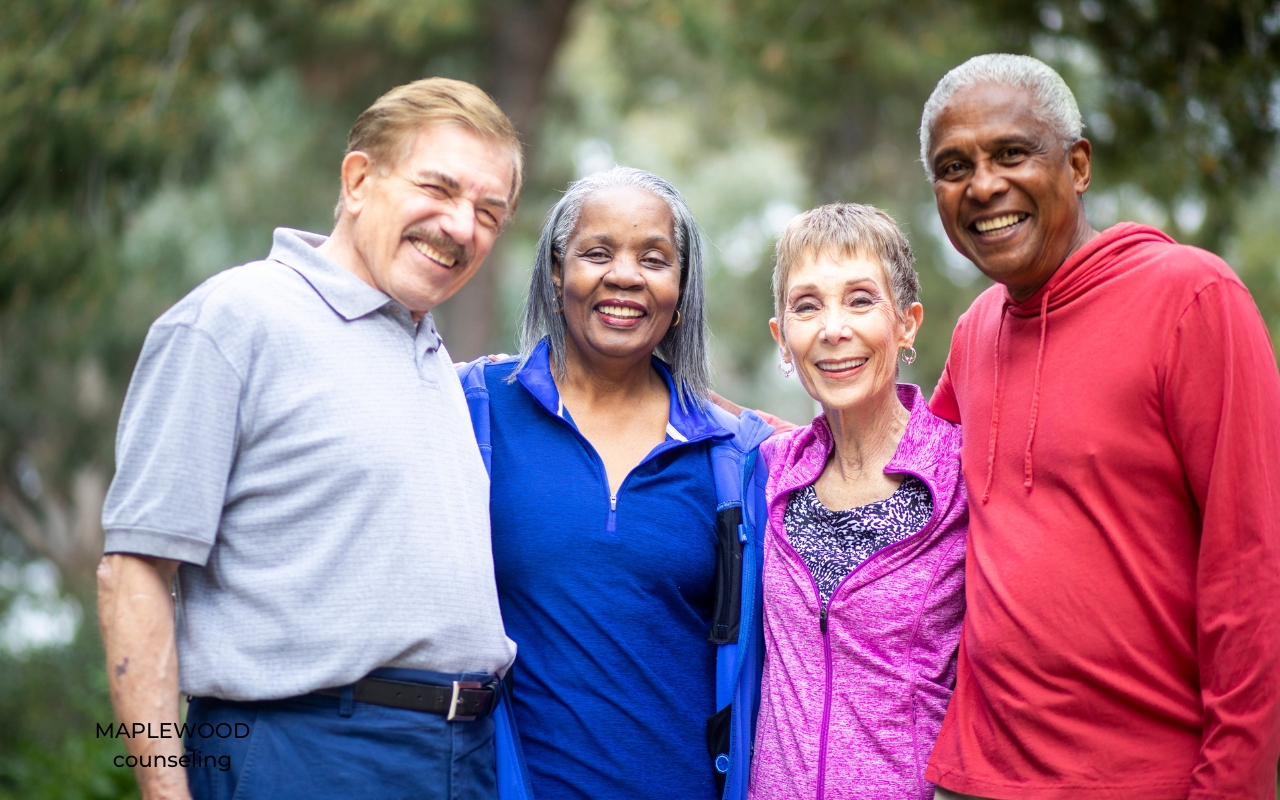
 

Marriage Counseling for Seniors


Navigating Relationship Challenges in Later Life

As we age, our relationships evolve and face unique challenges that can be difficult to navigate without support. For senior couples, whether in long-term marriages, second marriages, or newly formed partnerships, the complexities of aging can place significant strain on their relationship. Marriage counseling for seniors offers an invaluable resource for those seeking to strengthen their bond and address the issues that arise in later life.

In this blog post, we’ll explore the common issues faced by senior couples and how marriage counseling for seniors can provide the necessary support to enhance their relationships. We’ll also include valuable insights on when individual therapy might be beneficial, especially if one partner is reluctant to attend counseling.

Issues Faced by Long-Term Marriages


 Lack of Intimacy

Over time, many couples ans empty nesters experience a decline in physical and emotional intimacy. This can be due to various factors such as health issues, hormonal changes, or simply drifting apart. Lack of intimacy can lead to feelings of loneliness and disconnection. Marriage counseling for seniors can help couples rekindle their intimacy by addressing underlying issues and developing strategies to reconnect.

Complete Disconnection

Some senior couples find themselves completely disconnected, no longer getting along, and unsure of how to bridge the gap. This may stem from years of unresolved conflicts or changes in individual interests and lifestyles. Counseling provides a safe space to explore these disconnections and work towards rebuilding a meaningful relationship.

Unhappiness and Uncertainty

Feeling unhappy in a marriage and not knowing what to do next is a common sentiment among senior couples. Marriage counseling offers guidance and support to help couples understand their feelings, communicate effectively, and find ways to improve their relationship satisfaction.

Specific Challenges for Senior Couples

Counseling for Older Couples and Seniors

Chronic Illness and Caregiving

Dealing with a sick spouse who has chronic, terminal, or other serious medical issues can put immense pressure on a marriage. The healthy partner often takes on the role of caregiver, which can be both physically and emotionally exhausting. Counseling can help couples manage these challenges by fostering empathy, understanding, and practical coping strategies.

Dementia or Alzheimer’s Disease

When a spouse suffers from dementia or Alzheimer’s, it can dramatically alter the dynamics of the relationship. The caregiver may feel overwhelmed, leading to feelings of isolation and helplessness. Marriage counseling for seniors can provide support for the caregiving spouse and help them navigate the emotional complexities of this journey.

Fear About the Future

Aging brings about fears and uncertainties regarding the future, whether together or alone. Concerns about health, financial stability, and the prospect of living without a partner can cause anxiety and stress. Counseling can help couples address these fears, plan for the future, and support each other through life’s transitions.

When Individual Therapy Might Be Necessary


Reluctance from Your Spouse

Sometimes, one partner may be unwilling to attend therapy sessions. In such cases, individual therapy can be a valuable alternative. It allows the willing partner to explore their feelings, gain insights, and develop coping mechanisms independently. Individual therapy can also equip them with tools to better communicate and encourage their partner to seek help.

Personal Reflection and Growth

Even if your spouse is not on board, individual therapy can be beneficial for personal growth and understanding. It provides an opportunity to reflect on your own emotions, behaviors, and contributions to the relationship. This self-awareness can lead to positive changes that may influence the overall dynamics of the marriage.

Turning Things Around


Rekindling Joy and Connection

For many senior couples, the desire to enjoy time together and turn things around is strong. Marriage counseling offers a pathway to rediscovering joy and connection in the relationship. Through therapeutic interventions, couples can learn to communicate effectively, resolve conflicts, and find new ways to connect emotionally and physically.

Addressing Aging Concerns

Concerns about aging, illness, and what lies ahead can be daunting. Marriage counseling for seniors can help couples address these fears collaboratively, providing support and reassurance. By working together, couples can build a resilient partnership capable of facing the future with confidence.

Alleviating Loneliness and Anxiety

Feelings of loneliness, depression, and anxiety are common among seniors. Counseling provides a supportive environment to express these emotions and develop strategies to alleviate them. It can also help senior couples understand each other’s emotional needs and offer mutual support.

Caregiver Support and Relief

Caregivers often feel completely wiped out and exhausted. Counseling can offer much-needed support and relief, helping caregivers manage their responsibilities without sacrificing their well-being. It can also facilitate discussions about seeking additional help and resources.

Conclusion

Marriage counseling for seniors is a powerful tool for addressing the unique challenges faced by senior couples. Whether dealing with lack of intimacy, complete disconnection, chronic illness, fear about the future, or caregiver exhaustion, counseling provides the support needed to navigate these issues effectively.

By seeking professional help, senior couples can enhance their relationship, enjoy their time together, and face the future with renewed confidence. If you or someone you know is struggling with these challenges, consider reaching out for marriage counseling or individual therapy. It’s never too late to invest in your relationship and build a stronger, more fulfilling partnership.

Discover Marriage Counseling for Seniors

If you are looking for marriage counseling for seniors or by yourself, reach out. Together, we can help you navigate the complexities of aging and, when possible, strengthen your bond with your partner.

Get in touch now with Maplewood Counseling


Are You a Caregiver for a Family Member?

 

Need Help with Step Family or Blended Family Problems?

Need Help with Step Family or Blended Family Problems?

Struggling with Step Family Problems?

Get Counseling for Blended and Step Family Issues
Get Started

Navigating 11 Common Stepfamily Challenges


Practical Solutions for Blended Families


Blending two families into one harmonious unit can be incredibly rewarding, but it also comes with its unique set of challenges. As a step-parent or member of a blended family, you may face numerous issues that can test your patience and resilience. Understanding these common problems and learning how to address them can make all the difference in creating a peaceful and loving home environment.

Common Stepfamily Problems


1. Fights Over Kids

It’s not uncommon for step-parents and biological parents to clash over child-rearing practices. Differences in parenting styles and expectations can lead to frequent disputes about how things are handled with the kids…or how things are handled with the other person’s children.

Solution: Open communication is key. Have regular discussions about parenting philosophies and agree on a unified approach to discipline and nurturing. This will not only reduce conflicts but also provide a consistent environment for the children.

2. Frustration Over Spouse’s Discipline Methods

Frustration can arise when you disagree with how your spouse disciplines their children. It can feel like you’re stuck between supporting your spouse and protecting your own standards of discipline.

Solution: Approach this issue with empathy and patience. Share your concerns in a non-confrontational manner and work together to develop a discipline strategy that respects both of your viewpoints. Consider consulting a family therapist to help mediate and guide these conversations.

3. Feeling Like You’re Not a Priority

In blended families, it’s easy to feel sidelined, especially if your spouse is trying to balance attention between you and their children.

Solution: Communicate openly with your spouse about your feelings. Schedule regular date nights and one-on-one time to strengthen your bond and ensure that both partners feel valued and prioritized.

4. Jealousy and Interference from Ex-Spouses

Jealousy and interference from ex-spouses can create tension and stress within your new family unit.

Solution: Set clear boundaries with ex-spouses regarding communication and involvement in your new family dynamics. Encourage respectful co-parenting and focus on building trust within your own relationship.

5. Financial Stressors

Blending families often means blending finances, which can lead to conflicts over spending behaviors and financial priorities.

Solution: Create a transparent financial plan that includes budgets and shared financial goals. Regularly review your finances together to ensure both partners are on the same page and feel secure in their financial future.

6. Dealing with a Child’s Mental Health or Behavioral Issues

Children with mental health or behavioral issues can add another layer of complexity to stepfamily life.

Solution: Seek professional help to address these issues and develop coping strategies. Ensure that all family members are involved in the treatment process and understand how to support the child effectively.

7. Adjusting to Living Together

Adjusting to living together in a blended family can be challenging due to differing routines, habits, and personalities.

Solution: Take the time to learn about each other’s routines and preferences. Establish a family schedule that accommodates everyone’s needs and promotes harmony. Be patient and flexible as everyone adjusts.

8. Children Not Getting Along

Sibling rivalry and conflicts between step-siblings can create a tense atmosphere.

Solution: Foster a sense of unity by encouraging shared activities and creating opportunities for bonding. Address conflicts promptly and fairly, ensuring that all children feel heard and valued.

9. In-Law Issues

In-laws can sometimes have strong opinions about your blended family, which can lead to additional stress.

Solution: Set boundaries with in-laws and communicate your expectations clearly. Encourage respectful interactions and focus on building positive relationships based on mutual respect and understanding.

10. Disliking a Child’s Behavior

It’s natural to sometimes struggle with a child’s behavior, but this can be particularly challenging in a stepfamily.

Solution: Separate the behavior from the child. Focus on addressing the behavior constructively while maintaining a loving and supportive relationship. Seek professional guidance if necessary to develop effective strategies.

11. Anger Management

Anger can easily escalate conflicts and create a toxic environment.

Solution: Practice healthy anger management techniques such as deep breathing, taking breaks, and seeking professional help if needed. Encourage open communication and problem-solving rather than letting anger dictate interactions.

Coping Strategies for Blended Family Problems

Navigating stepfamily challenges requires patience, empathy, and a commitment to open communication. Here are some additional coping strategies to help you manage common blended family issues:

  • Family Meetings: Hold regular family meetings to discuss any issues, share positive experiences, and plan activities. This creates a platform for open dialogue and strengthens family bonds.
  • Professional Support & Family Counseling: Don’t hesitate to seek the help of a family therapist or counselor who understands how to help step and blended families. They can offer valuable insights and strategies tailored to your unique situation.
  • Self-Care: Ensure that you and your partner take time for self-care. Managing a blended family can be stressful, and taking care of your own well-being will enable you to be more present and effective as a parent and partner.
  • Education: Educate yourself about blended family dynamics and parenting strategies. There are numerous resources available, including books, workshops, and online communities, that can provide support and guidance.

By understanding and addressing these common stepfamily problems, you can create a more harmonious and supportive family environment. Remember, every family is unique, and finding what works best for yours may take time and effort. Stay patient, compassionate, and committed to building a loving and inclusive home.

Are you struggling with step or blended family problems? You are not alone. Reach out and we can help.

Get in touch now with Maplewood Counseling


Adult Consequences of Parenting & Attachment Styles


Going Through a Challenge in Your Life Right Now?

Going Through a Challenge in Your Life Right Now?

Going Through a Challenging Time?

How to Cope with Things Beyond Our Control
Get Started

Life is a Series of Challenges

The Best Ways to Cope with Things Beyond Our Control

Life is a series of challenges for all of us, at times. There are so many things we cannot control. From the moment we are born, we face challenges in all aspects of our lives – personal, professional, emotional, mental, and physical.

Are you dealing with a challenge now?

Does any of this sound familiar?

  • Family problems including parenting, step and blended family challenges
  • Relationship & marital issues
  • A struggling adult or younger child
  • In-law issues
  • Anxiety, depression and other mental health issues
  • Grief & loss – loss of a loved one, losing a loved one
  • Challenges related to a divorce or a break-up
  • Work and career challenges, loss of job, new job, unhappy in your job
  • Serious health & chronic health issues, other health issues
  • Traumatic experiences & past trauma
  • Dealing with aging parents, sandwich generation – caring for kids and parents
  • Personal and spiritual challenges

These challenges can be small or big. If we are lucky enough to practice on smaller challenges before we have to cope with bigger, more painful experiences, it helps. Practiing includes it is working with our attitude, thoughts (negative thoughts) and approach to the challenge will help tremendously. If you are faced with a bigger challenge, it can be extremely hard to know how to get through it.

Overcoming challenges is not always easy. It requires effort, dedication, and a positive mindset. Sometimes, we may feel like giving up when faced with seemingly insurmountable obstacles. But it is during these tough times that we must remind ourselves challenges do not last forever and we may need support finding the best ways to navigate through a painful time.

Building Resilience

When we face challenges and overcome them, we build resilience. Resilience is the ability to bounce back from difficult situations and adapt to change. It is a crucial skill that helps us navigate through life’s ups and downs with grace and strength. By constantly pushing ourselves to overcome challenges, we develop the resilience needed to face any obstacle that comes our way.

Personal Growth

Every challenge we overcome teaches us something about ourselves. It could be a new skill, a different perspective, or a hidden strength. These experiences help us grow as individuals and shape our character. We become more confident in our abilities and learn to trust ourselves in difficult situations. Overcoming challenges also allows us to step out of our comfort zone and discover new interests and passions.

Empathy and Understanding

The challenges we face are not unique to us. Everyone goes through struggles in their own way. By overcoming our own challenges, we develop empathy and understanding towards others who may be going through similar situations. This allows us to connect with others on a deeper level and provide support, encouragement, and guidance.

Creating a Positive Impact

When we overcome challenges, we not only benefit ourselves but also those around us. Our resilience and personal growth inspire others to do the same. By sharing our experiences and lessons learned, we can motivate and empower others to face their own challenges head-on. This creates a positive ripple effect that spreads beyond just our immediate circle, making a difference in the world.

A Lifelong Skill

Resilience is not something that can be learned overnight. It takes time and effort to develop, but it is a skill that will serve us throughout our lives. As we face new challenges and changes, our resilience allows us to adapt and overcome with ease. It becomes a part of who we are and helps us navigate through the ups and downs of life with grace and strength.

Conclusion

Overcoming challenges is a natural part of life, and it is how we respond to them that truly matters. By approaching challenges with a compassionate and inclusive mindset, we learn valuable lessons about ourselves, develop empathy towards others, create positive impact, and cultivate lifelong resilience. So embrace your challenges, face them with determination and kindness, and know that you are capable of overcoming anything that comes your way. So let’s continue to stand tall and face our challenges together with empathy, resilience, and compassion.

If you are dealing with a challenge now and need help, reach out.

Get in touch now with Maplewood Counseling

Mindfulness Helps You Navigate Life & Relationship Challenges


Need Help with Step Family or Blended Family Problems?

Discernment Counseling vs. Marriage Counseling

Discernment Counseling vs Marriage Counseling

What is RIght for Your Relationship?
Get Started

Discernment Counseling vs. Marriage Counseling


Which is Right for Your Relationship?


When couples face challenges in their relationship, the path forward isn’t always clear. Should you work towards repairing the relationship, or is it time to part ways? This is where professional guidance can make a significant difference, but it’s crucial to choose the right type of counseling. In this post, we’ll compare Discernment Counseling and Marriage Counseling to help you decide which option might be the best fit for your situation.

Discernment Counseling vs. Marriage Counseling : The Goals

Discernment Counseling is designed for couples who are unsure whether they want to pursue staying together or initiate a divorce. Its primary goal is not to solve marital problems but to explore these options in a way that brings clarity and confidence in making a decision about the future of the relationship. It’s particularly beneficial when one partner is leaning towards ending the relationship, and the other is hoping to repair it.

Marriage Counseling, on the other hand, assumes that both partners are willing to work on the relationship. The focus is on identifying and addressing the issues that are causing conflict or dissatisfaction, with the goal of improving communication, understanding, and emotional connection so the marriage can be more fulfilling for both parties.

The Process

The process of Discernment Counseling involves a structured short-term commitment, usually between 1 to 5 sessions. The counselor meets with the couple together and each partner individually to assess their readiness and willingness to work on the relationship. The process helps couples understand what has happened to their relationship and what each of them wants for the future.

Marriage Counseling requires a more extended commitment and involves regular sessions over a period of time, which could range from a few months to a year or more, depending on the couple’s needs and progress. The therapist works with the couple to develop communication skills, resolve conflicts, and deepen their connection, often assigning homework or exercises to practice between sessions.

Average Number of Sessions

Discernment Counseling is explicitly short-term, typically involving 1 to 5 sessions. The limited number of sessions is intentional, designed to lead to a decision about whether to commit to marriage counseling or move towards separation or divorce.

In contrast, Marriage Counseling varies widely in the number of sessions required, as it is highly dependent on the specific issues the couple is facing and their willingness to engage in the process. Some couples may see improvements in as few as 8-10 sessions, while others may continue for several months or even longer.

Making the Right Choice for Your Relationship

Choosing between Discernment Counseling and Marriage Counseling depends on where you and your partner are in your relationship. If you’re on the fence about whether to stay together or separate, and if there’s significant uncertainty about the future of your relationship, Discernment Counseling can provide the clarity needed to make an informed decision. It’s an ideal choice for couples not yet ready to commit to the work required in marriage counseling but who want to understand their options better.

However, if both you and your partner are committed to improving your relationship and willing to put in the effort to change, Marriage Counseling is likely the more appropriate path. With the help of a skilled therapist, you can work together to address the challenges in your relationship and build a stronger, more fulfilling partnership.

Whatever decision you make, it’s essential to approach it with openness, honesty, and a willingness to examine not just your partner’s behavior and needs, but your own as well. Professional guidance can offer invaluable support as you navigate the complexities of your relationship, helping you to move forward in a way that is healthiest and most constructive for both partners.

If you need to undestand if discernment counseling vs marriage counseling is best for you now, reach out.

Get in touch now with Maplewood Counseling

Online Couples Therapy


The Hidden Costs of Untreated Depression & How to Find Healing

The Hidden Costs of Untreated Depression & How to Find Healing

The Silent Struggle: How Untreated Depression Impacts Your Life and Relationships


How Untreated Depression Impacts Your Life and Relationships

We live in a culture that often praises “powering through” or “keeping a stiff upper lip.” But when you are carrying the heavy, invisible weight of depression, simply pushing through isn’t just exhausting—it can be damaging.

If you have been feeling low for a long time, you might have convinced yourself that this is just “how life is” or that you can manage it on your own. But untreated depression is not a sign of strength or endurance; it is a serious medical condition that can quietly erode the foundation of your life.

At Maplewood Counseling, we want you to know that you don’t have to carry this burden alone. Understanding the ripple effects of untreated depression is the first step toward reclaiming your joy, your productivity, and your connections with the people you love.

The Ripple Effect: It Doesn’t Just Affect You

Depression is often viewed as a solitary experience—a person alone in a dark room. While the internal experience is deeply personal, the impact radiates outward, touching every part of your world.

1. The Erosion of Daily Life and Routine

When depression is left untreated, the color slowly drains from your daily existence. Tasks that used to be automatic—showering, making coffee, answering a text—can feel like climbing a mountain.

  • The Struggle: You might find yourself procrastinating, sleeping excessively, or neglecting personal hygiene.
  • The Impact: This disruption of routine can lead to a chaotic environment, missed deadlines, and a profound sense of failure, which only feeds the cycle of depression.

2. The Professional Toll

Have you noticed your focus slipping at work? Untreated depression often manifests as “brain fog,” making it difficult to concentrate, make decisions, or retain information.

  • The Struggle: You might be physically present at your desk but mentally miles away (a phenomenon known as “presenteeism”).
  • The Impact: This can lead to stalled career growth, strained relationships with colleagues, and even job loss. It’s not a lack of ambition; it’s an illness interfering with your ability to perform.

3. Strained Relationships and Intimacy

Depression can build an invisible wall between you and your partner. You may feel numb, irritable, or simply too exhausted to engage.

  • The Struggle: Your partner might interpret your withdrawal as a lack of love or interest. They may feel rejected when you pull away physically or emotionally.
  • The Impact: This dynamic often leads to conflict, resentment, and a breakdown in communication. Without intervention, relationship counseling is often needed to repair the disconnect caused by the untreated symptoms.

4. The Impact on Children and Family

Children are incredibly perceptive observers. Even if you try to hide it, they often sense when a parent is emotionally absent or struggling.

  • The Struggle: You may have less patience for their needs or lack the energy to play and connect.
  • The Impact: Untreated parental depression can inadvertently model unhealthy coping mechanisms. Children may internalize your mood, feeling responsible for your happiness or developing anxiety themselves.

Why Do We Avoid Getting Help?

If the impact is so severe, why do so many people suffer in silence? The barriers are often complex and deeply personal.

  • Fear of the Label: Many fear that a diagnosis will define them or that others will view them as “weak” or “broken.”
  • The “Not Sick Enough” Myth: You might tell yourself, “Other people have it worse,” or “I can still get out of bed, so I must be fine.” Depression exists on a spectrum; you don’t have to be at rock bottom to deserve support.
  • Misunderstanding the Cause: Some believe their sadness is purely situational (e.g., a bad job or a difficult relationship) and don’t realize that depression can skew their perception of those situations.
  • Genetic and Biological Factors: Sometimes, we normalize the struggle because “everyone in my family is like this.” While genetics play a role, a family history of depression doesn’t mean you have to suffer through it without help.

Breaking the Cycle: Actionable Steps Toward Healing

Recognizing that you need help is a profound act of courage. It is the moment you decide that you deserve more than just survival.

Acknowledge the Symptoms

Be honest with yourself about what you are experiencing. Are you sleeping too much or too little? Have you lost interest in hobbies? Are you more irritable than usual? Recognizing these as symptoms of an illness, rather than character flaws, is empowering.

Start Small

Recovery doesn’t happen overnight. Set tiny, achievable goals.

  • Make your bed.
  • Step outside for five minutes of fresh air.
  • Send one text to a friend.
    Small wins build momentum and help combat the feeling of helplessness.

Challenge the Stigma

Remind yourself that mental health is physical health. You wouldn’t ignore a broken leg or untreated diabetes; your mental well-being requires the same care and professional attention.

Seek Professional Support

Therapy is not just about “venting”; it is a structured process to help you understand your triggers, rewire negative thought patterns, and develop coping strategies.

  • Individual Therapy: Depression treatment can provide you with tools like Cognitive Behavioral Therapy (CBT) to manage symptoms.
  • Couples Therapy: If your relationship has suffered, therapy can help your partner understand your condition and learn how to support you effectively.

At Maplewood Counseling, we provide inclusive care for people of all races, cultures, and backgrounds, including interfaith, interracial, BIPOC, LGBTQIA+, and blended families. Our therapists bring lived experiences and specialized training to create a safe, affirming space for all.

Frequently Asked Questions (FAQs) About Untreated Depression

Q: Can depression go away on its own?
A: Sometimes episodes of depression can lift on their own, but without treatment, they are likely to return—often more intensely. Untreated depression can become a chronic condition that significantly impacts your physical health and life expectancy.

Q: Am I depressed or just burnt out?
A: The symptoms can overlap, but burnout is usually tied specifically to work or caregiving stress and improves when you rest or change your environment. Depression pervades all areas of life and often includes feelings of worthlessness or an inability to feel pleasure, even when resting.

Q: Will medication change my personality?
A: This is a common fear. The goal of medication is not to change who you are, but to clear the fog of depression so you can be who you are. Many people find that treatment helps them feel more like themselves than they have in years.

Q: How do I tell my partner I think I’m depressed?
A: Choose a quiet time when you aren’t fighting. You can say, “I haven’t felt like myself lately, and I think I might be dealing with depression. It’s affecting how I connect with you, and I want to get help because our relationship matters to me.”

Q: What if I can’t afford therapy?
A: Cost is a valid concern. However, many therapists offer sliding scales, and insurance often covers mental health services. Consider the cost of not treating it—lost wages from missed work, strained relationships, and physical health issues often cost more in the long run.

Your life is waiting for you on the other side of this fog. You deserve to feel fully alive, connected, and hopeful.

Estranged Marriage Therapy NJ | Find Your Path

Estranged Marriage Therapy NJ | Find Your Path

Living in an Estranged Marriage? How Therapy Can Help


Estranged Marriage Therapy NJ | Find Your Path

A marriage is a partnership built on a foundation of love, trust, and shared commitment. But what happens when that foundation begins to crack? Sometimes, without a single major event, partners can drift apart, leaving a painful emotional distance. This is often called an estranged marriage, a relationship where the connection that once felt so strong has faded into silence and separation.

By Debra Feinberg, LCSW, Robert Jenkins, LCSW (Reviewed by Senior Level Therapists)

Are you sleeping next to someone who feels like a total stranger? A marriage is meant to be a partnership built on love, trust, and shared dreams. But what happens when that foundation slowly begins to crack? Sometimes, without a single major event, partners can drift apart, leaving a painful emotional distance between them.

Living in an estranged marriage can be an incredibly lonely and confusing experience. You might feel stuck, wondering how you got here and not knowing what to do next. Whether the distance grew from unresolved conflicts, life transitions, or simply growing in different directions, the emotional impact is heavy.

If you feel like you and your partner are living more like roommates than a married couple, please know that you are not alone. There are clear, compassionate paths forward. In this guide, we will explore the signs of an estranged marriage, the challenge of deciding your next steps, and how professional therapy provides a safe space to find the clarity you deserve.

The Heavy Reality of an Estranged Marriage

An estranged marriage is defined by a significant emotional and psychological distance between partners. It is much more than a temporary rough patch. It is a persistent state of disconnection where intimacy, open communication, and mutual support have slowly disappeared.

For anyone experiencing this, the sense of loss can feel overwhelming. You might find yourself grieving a relationship that is technically still intact. This dynamic affects your mental health, your happiness, and how you show up in your daily life. Acknowledging that your relationship has reached this point is the brave first step toward understanding what is happening and deciding how to move forward.

Signs You Are Living in an Estranged Marriage

Do you recognize your relationship in the patterns below? Facing these realities can be difficult, but identifying the problem is necessary for healing.

A Deep Emotional Disconnect

One of the most telling signs is a profound emotional gap. It is not just about spending time in separate rooms. It is the heartbreaking feeling that the shared laughter, deep conversations, and mutual interests that once defined your bond are completely gone. You might feel like you are living parallel lives, coexisting in the same space without truly connecting.

Emotional Withdrawal and Silence

Do you feel unseen or unheard by your partner? Emotional withdrawal often looks like a general lack of interest in each other’s daily lives. Conversations that were once warm and engaging may now feel cold, brief, and purely transactional. This withdrawal leaves you feeling isolated within your own home.

The Disappearance of Intimacy

Intimacy is about far more than physical closeness; it requires emotional vulnerability and trust. When a marriage becomes estranged, both physical and emotional intimacy usually vanish. A lack of affection, an unwillingness to be vulnerable, and a general avoidance of closeness signal a deep divide between you and your partner.

Fantasizing About a Life Apart

If you frequently find yourself thinking about or wishing for a life without your partner, it is a significant indicator of relationship distress. Thoughts of separation or divorce often surface after a long period of unhappiness. Reflecting on what has led you to this point is a critical part of understanding the depth of your estrangement.

Not Sure What to Do? Finding a Safe Space

When you realize you are living in an estranged marriage, the most immediate feeling is often paralysis. You might ask yourself, “Do we stay and try to fix this, or is it time to walk away?”

Making this decision while navigating intense emotions is incredibly difficult. You might fear the unknown of starting over, worry about the impact on your family, or hold onto hope that the person you fell in love with will return.

You do not have to make these heavy decisions entirely on your own. Finding a neutral, supportive environment is vital for sorting through your thoughts. This is exactly where professional counseling steps in to guide you.

How Local Therapy Can Guide Your Path Forward

Whether you want to rebuild your connection or figure out how to separate amicably, therapy offers a compassionate, non-judgmental space to explore your options. At Maplewood Counseling, we provide inclusive care for people of all backgrounds, creating an affirming space to process your relationship challenges.

The Power of Couples Therapy

If both partners are willing to do the work, couples counseling can be transformative. A skilled therapist acts as a neutral guide, helping you uncover the root causes of your distance.

In couples therapy, you will:

  • Learn effective strategies to communicate your needs clearly and without blame.
  • Acquire tools to resolve deeply rooted conflicts constructively.
  • Reignite emotional bonds and rebuild trust through guided, step-by-step exercises.
  • Safely discuss your fears and hopes for the future of the relationship.

Finding Clarity Through Individual Therapy

What if your partner refuses to attend counseling? This is a very common challenge. However, their reluctance should never stop you from seeking support.

Individual therapy is highly beneficial when you are living in an estranged marriage. It provides a confidential space to process your own feelings, set healthy boundaries, and decide what you truly want for your life. Sometimes, the positive changes and clarity you gain through individual therapy can even inspire your partner to engage in the process later on.

Flexible Care: In-Person and Virtual Sessions

We understand that taking the first step toward therapy can feel intimidating. To make support as accessible as possible, we offer both in-person sessions in our local office and secure virtual sessions. Virtual counseling provides the exact same high-quality care, allowing you to engage in therapy from the comfort and privacy of your own home.


Frequently Asked Questions

Can an estranged marriage actually be saved?
Yes, many estranged marriages can be saved and even transformed into stronger partnerships. However, this requires a genuine commitment from both people to do the emotional work. Success depends heavily on a mutual desire to repair the relationship and improve communication.

How do we know if it is time to separate?
There is no single timeline or definitive answer. It often comes down to whether both partners are willing to actively work on the relationship. If mutual respect is entirely gone, or if the environment has become toxic, it may be time to consider separation. Therapy can help you find the clarity needed to make this difficult decision respectfully.

Is it normal to feel guilty about wanting to leave?
Absolutely. Marriage comes with a deep sense of commitment, and considering leaving can trigger intense guilt. Individual therapy is an excellent space to unpack this guilt, helping you distinguish between an obligation to your vows and the necessity of protecting your own well-being.

What if we have children to consider?
Navigating an estranged marriage is especially complex when children are involved. Children thrive in environments where their parents are emotionally healthy. A therapist can help you navigate this specific challenge, ensuring that whatever path you choose—reconnection or separation—prioritizes a stable, low-conflict environment for your family.

Take the Next Step Toward Peace and Clarity

Living in a disconnected marriage is exhausting, but you do not have to remain stuck in uncertainty. You deserve a relationship that feels secure, supportive, and fulfilling.

Whether your ultimate path leads to reconciliation or a compassionate decision to separate, taking action is a profound sign of strength. Let us help you transform your current challenges into an opportunity for growth and clarity.

Reach out to our compassionate team today to schedule an in-person or virtual session. We are here to provide the safe, empathetic guidance you need to figure out your next steps and reclaim your peace of mind.

Helpful Resources