
Couples Therapy in Maplewood, NJ — From a Premium Specialty Practice
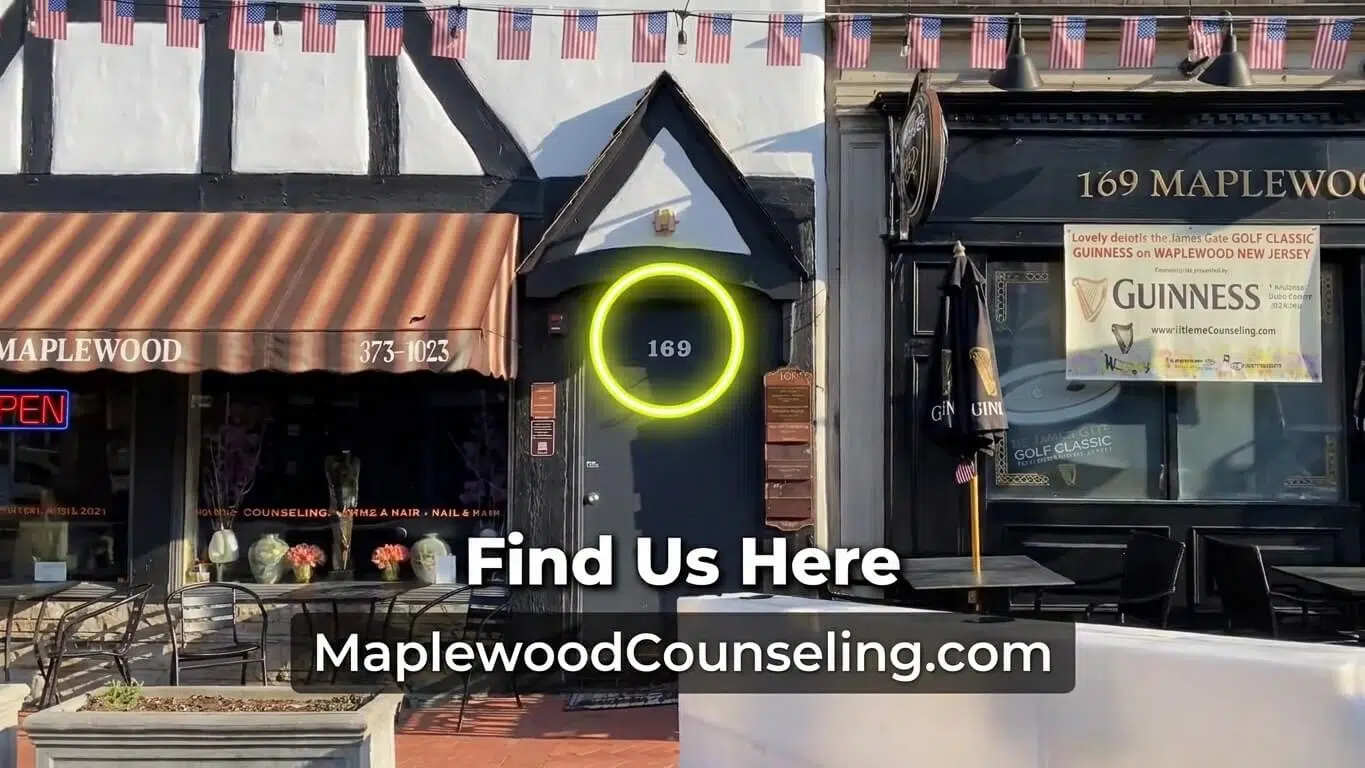
For 21 years, Maplewood Counseling has helped our neighbors navigate the hardest moments and rebuild the connection that matters most. In-person sessions in our Tudor office at 169 Maplewood Avenue — or secure online video across New Jersey, evenings and weekends.
Open 7 days a week — Saturday 9 AM–3 PM, Sunday 9 AM–3 PM, weekday evenings until 8–9 PM. Therapy that fits your real schedule.
Schedule a 15-Minute Fit Call →
Or call (973) 902-8700 — we return calls the same business day.
Why Maplewood Couples Choose Us
You’re our neighbors. You walk past the office on Maplewood Avenue. You know the rhythm of this town — the train into the city, weekend mornings at the farmers market, the school pickup lines, the dinners that end with everyone on their phones by 8:30.
Most couples we work with from Maplewood aren’t in crisis. They’re in drift. Two careers, two parents, two people who used to laugh and now mostly coordinate. The connection got quietly postponed — not abandoned.
For 21 years, we’ve helped Maplewood couples slow down enough to be honest, then move forward stronger. Same town. Same Tudor building above Lee Nails. Same focused, premium specialty work.
How We Approach Couples Therapy for Maplewood Residents
We’re specialty-trained NJ-licensed clinicians with 10–25+ years of couples specialty. Small caseloads. Deep work. No quick fixes.
Emotionally Focused Therapy (EFT) for the Drift Maplewood Couples Know
EFT is the gold-standard approach for couples who’ve drifted into parallel lives. It helps you identify the cycle you’ve fallen into, find your way back to honest conversation, and rebuild the emotional bond that’s been buried under logistics.
Trauma-Informed, Attachment-Based Work
How you each learned to attach as kids shapes how you fight, withdraw, and reconnect now. We work with the patterns underneath the arguments — gently, with no judgment, and with practical tools you can use the same week.
Discernment Counseling — When You’re Not Sure Whether to Stay
If one of you is “leaning out” and the other is “leaning in,” we offer short-term discernment counseling (1–5 sessions) designed to bring clarity — not to push a decision either way.
Learn more about our expert-guided couples therapy approach →
Our Team of Licensed NJ Clinicians
- Senior LCSWs and LMFTs with 10–25+ years of couples specialty
- All licensed in New Jersey
- Trained in EFT, attachment-based, integrative trauma-informed work
- Small caseloads — focused, sustained clinical work
- LGBTQ+ affirming and culturally informed
- Most clients start within a few days of their fit call, not a few weeks
Insurance & Fees for Maplewood Couples
We are an out-of-network specialty practice by design — not by accident. Going OON lets our clinicians keep small caseloads and focus deeply on relationship work.
Session rates: $150–$240. We provide superbills for OON benefits submission. HSA and FSA accepted.
Many Maplewood couples have OON benefits that cover 50–70% post-deductible — we can help you understand yours during your fit call.
What Maplewood Couples Say
“After years of drift, we found ourselves actually talking again. The work was hard but the change felt real.”
— Maplewood couple, together 14 years
“We thought we needed to decide whether to stay or split. They helped us figure out what we actually wanted — without pressure either way.”
— Maplewood couple, married 11 years
“What surprised me was how practical the work was. Real tools, real changes by the next session.”
— Maplewood husband, married 17 years
Frequently Asked Questions
How does couples therapy in Maplewood work — online or in-person?
Both. Our office at 169 Maplewood Avenue, Suite 4 is walking distance from downtown Maplewood. We also offer secure online sessions for any New Jersey resident, including evenings and weekends. Most Maplewood couples come in person; some mix it up depending on the week.
Do you take insurance?
We are an out-of-network specialty practice. We provide superbills for OON benefits submission. Many Maplewood couples have OON benefits that cover 50–70% post-deductible.
How long does couples therapy usually take?
Most couples we work with do meaningful work in 12–20 sessions, though the range varies. We’ll discuss your situation and timeline in your fit call.
What if we’re not sure whether to stay together?
We offer discernment counseling specifically for that. It’s a short, structured process designed to bring clarity, not push a decision.
Do you work with LGBTQ+ couples?
Yes. Multiple clinicians on our team specialize in LGBTQ+ affirming work.
What if my partner doesn’t want to come at first?
Common. We work with individuals on relationship issues too — and often the partner joins later once they see it’s not adversarial.
How soon can we start?
Most new clients start within a few days of their fit call, not weeks. Our Client Care Coordinator will match you with availability that works.
Ready to Talk to a Maplewood Couples Therapist?
Schedule a 15-minute fit call with our Client Care Coordinator. They’ll listen to what you’re looking for and help match you with the right therapist on our team.
Prefer to talk now? Call (973) 902-8700.
169 Maplewood Avenue, Suite 4 · Maplewood, NJ 07040 · Walking distance from downtown Maplewood