
Expert-Guided Couples Therapy in NJ
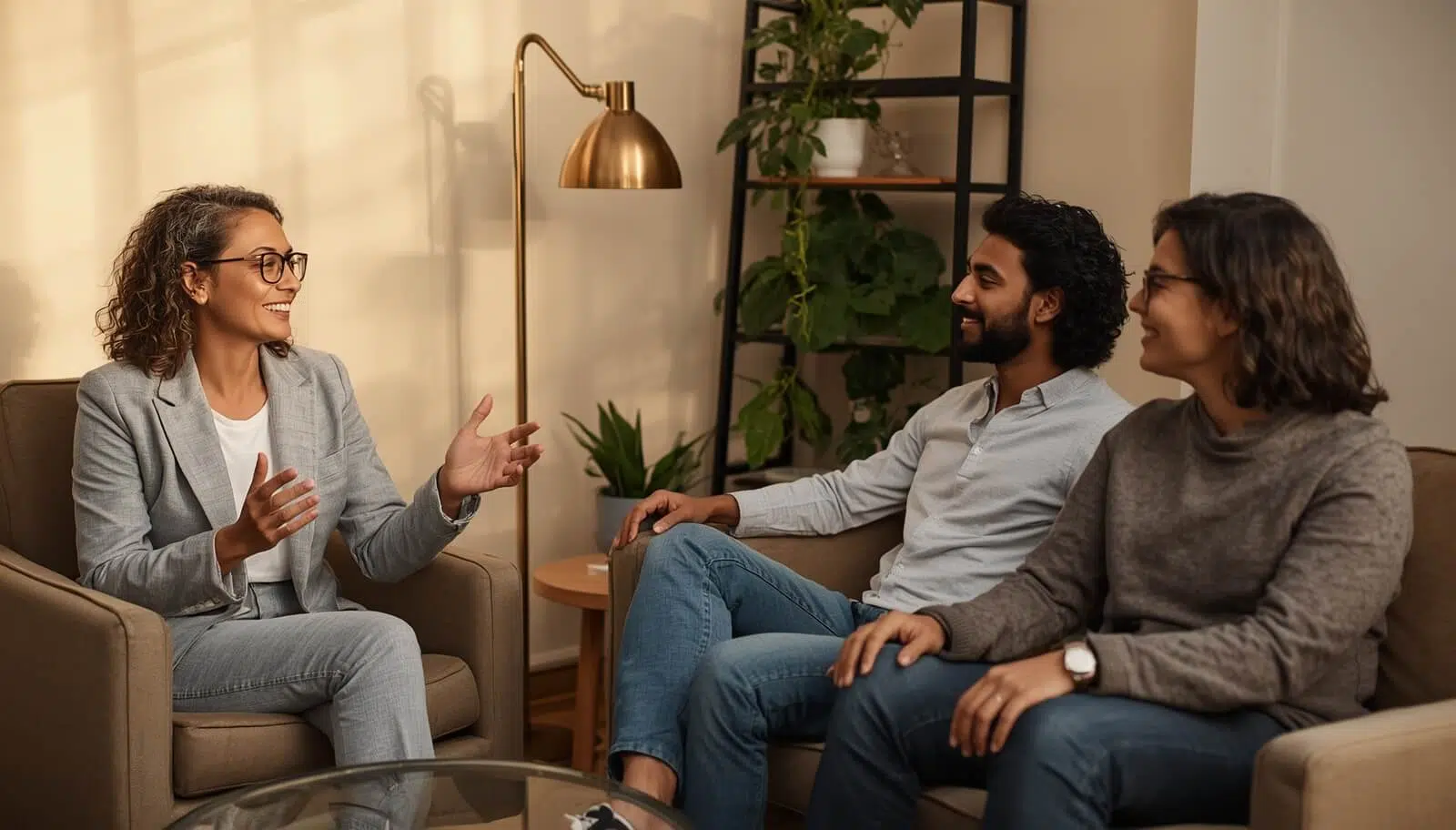
Premium specialty practice. Experienced, out-of-network clinicians. In-person at our Maplewood office — or secure online video across New Jersey, evenings and weekends.
Open 7 days a week — Saturday 9 AM–3 PM, Sunday 9 AM–3 PM, weekday evenings until 8–9 PM. Therapy that fits your real schedule.
When You Both Want This to Work — and You’re Stuck
You’re not in the relationship you thought you’d be in by now. Maybe the same disagreement keeps coming around in slightly different costumes. Maybe the closeness has flattened into something more like roommates. Maybe one of you wants to talk and the other wants quiet, and neither of you knows how to get unstuck.
What you’re looking for isn’t a worksheet or a communication tip you read in a magazine. You’re looking for someone trained to actually see what’s happening between you — and structured enough to help you change it.
That’s what couples therapy at our practice is for. We’re a premium specialty practice for couples and online therapy in New Jersey. Out-of-network by design — we keep our caseloads small enough to do focused, sustained work. The kind that insurance-driven volume practices can’t offer. Whether you’re searching for “couples therapy near me” in Maplewood, South Orange, Millburn, or anywhere else in New Jersey — and want a senior-led specialty practice rather than the closest generalist — that’s exactly what we are. We’ve been working with NJ couples this way since 2005.
🔒 Confidential · 📋 Superbills for OON insurance · 💳 HSA/FSA accepted · 🗺 In-person + telehealth across NJ
How We Approach Couples Therapy
Couples work with us isn’t a script — it’s a structured space where two people, with a trained clinician, can slow down enough to actually understand what’s been happening between them.
What the first session looks like
A first session runs 60 minutes, depending on the clinician and what you’ve scheduled. Before that session, you and your partner each fill out a brief intake so your therapist has context — there’s value in each of you having a chance to write things you may not yet have said aloud. Then you come together — in our Maplewood office or via secure video — and tell your story. Your therapist listens to each of you, watches the patterns, and at the end of the session helps you both name what the work might look like going forward.
Who we work with
Couples therapy at our practice is for every kind of couple: married, unmarried, dating, engaged, partnered, blended families, LGBTQ+ couples, multicultural couples, couples with one or both partners in recovery, couples who’ve been together five months or forty years. The framework is the same — what changes is which patterns we’re addressing.
Methods, matched to your relationship
We don’t run one playbook for every couple. Depending on what’s between you, your therapist may draw on:
- Emotionally Focused Therapy (EFT) — when conflict cycles around disconnection, withdrawal, and feeling unseen
- Attachment-Based and Relational Therapy — when long-standing patterns from earlier relationships are showing up in this one
- Trauma-Informed Therapy — when attachment trauma, infidelity, family-of-origin patterns, or major transitions are part of the picture
- Discernment Counseling (stay or separate) — when one or both partners are unsure whether to stay or separate; structured short-term work to help you decide
What couples typically come to us for
The reasons couples reach out fall into patterns: communication breakdown, recovery after infidelity (see our marriage counseling page for more on this), drift and distance, parenting differences, intimacy loss, major life transitions (career change, relocation, illness, kids leaving home, retirement), considering separation (which often calls for discernment counseling), and preparing for marriage (see our premarital counseling page). If your situation isn’t on the list, the fit call is where we figure out whether we can help.
Insurance & Fees
We’re a private-pay, out-of-network specialty practice. That’s a deliberate choice — being out-of-network means we focus on the specific clinical work that matters for your relationship, not the modalities or session lengths an insurance company will authorize. We keep our caseloads small enough to do focused, sustained work.
Session rates
See current session fees
Out-of-network specialty practice. HSA/FSA eligible. View current rates & insurance details →
90-minute and 2-hour intensives are priced separately — particularly useful for couples in crisis, infidelity recovery, or discernment work — and shared during your fit call.
Out-of-network insurance reimbursement
If your insurance plan includes out-of-network mental health benefits (most PPO plans do — HMO plans usually don’t), you can typically get 50–80% of each session reimbursed by submitting our superbill.
Call your plan and ask:
“What are my out-of-network mental health benefits for CPT code 90847?”
90847 is the family/couples therapy code — different from individual therapy.
HSA, FSA, and HRA — fully accepted
Couples therapy is a qualified medical expense. Pay with your HSA, FSA, or HRA card and the cost comes out pre-tax — effectively a 22–32% discount depending on your tax bracket. Most underused cost-saver in OON couples therapy.
What Couples Therapy Clients Say
★★★★★
“Excellent therapy practice in Maplewood, NJ. Particularly strong in couples therapy, but also for individual therapy. The team is responsive, professional, and client-focused — highly recommend for anyone in Essex County looking for thoughtful, experienced therapists.”
— Dana C.
Google review · June 2026
“
Our marriage therapist at Maplewood Counseling helped my spouse and I finally resolve issues we’ve been unable to do on our own. It was incredibly helpful. We learned better ways to communicate and really listen to each other. It has made a huge difference in our marriage and connection.
— Couples therapy client
Anonymized for privacy
★★★★★
“Debra is a warm and caring therapist with a strong background in helping couples and families repair ruptures in their relationships. I highly recommend her and the therapists that work at Maplewood Counseling to assist families in need of support.”
— Kelly F.
Google review · May 2026
Couples Therapy Questions People Ask Most
How is couples therapy different from marriage counseling?
The clinical work is the same — what changes is the framing. Couples therapy at Maplewood Counseling is for every kind of couple: married, engaged, dating, partnered, LGBTQ+, blended families, second marriages. If you’re specifically married and want marriage-focused work — affair recovery, decades-long patterns, parenting strain — our marriage counseling page is built around that frame. Either way, you’re getting the same evidence-based care from our couples specialists.
How long does couples therapy take?
Most couples see meaningful change in 8–20 sessions, though it depends on what’s being worked through and the goals you set together. Couples in crisis or doing intensive infidelity recovery may benefit from a longer arc — including 90-minute intensive sessions — while focused tune-up work is often shorter.
What is the 5-5-5 rule in couples therapy?
The 5-5-5 rule is a structured communication tool used to slow down emotionally charged conversations. Each partner takes 5 minutes to speak without interruption, the other partner takes 5 minutes to reflect back what they heard, then both spend 5 minutes discussing together. It’s a useful starter technique — but at Maplewood Counseling we go deeper than scripted rules, using evidence-based approaches like Emotionally Focused Therapy (EFT) that address the underlying attachment patterns driving recurring conflict.
How much does couples therapy cost?
Couples therapy costs vary widely in New Jersey. In-network sessions through insurance typically have a low out-of-pocket copay. Specialty out-of-network practices like Maplewood Counseling charge premium fees reflecting experienced clinician expertise, with 90-minute intensive sessions available. Most out-of-network plans reimburse 50–80% — we provide a superbill after each session for you to submit. HSA and FSA accounts accepted. The investment matters because expertise matters: an experienced couples specialist often does in 8–12 sessions what generalist therapy takes 6 months to accomplish. See current session fees on our Book page →
What kind of therapy is best for couples?
The most evidence-based approaches for couples therapy are Emotionally Focused Therapy (EFT), and attachment-based work. EFT — developed by Dr. Sue Johnson — has 75%+ success rates in restoring secure connection and is our primary modality and excels at communication patterns and conflict de-escalation. Attachment-based therapy goes deeper into childhood patterns that shape adult relationships. The right approach depends on your situation — infidelity recovery, communication breakdown, premarital prep, or general drift — which is why our clinicians match each couple to the most fitting modality.
Couples Therapy Near You
We work with couples across New Jersey — in-person at our Maplewood office and by secure online video statewide. Explore our specialty pages for your area:
Ready to Start?
Call (973) 902-8700. Our care team responds quickly — they’ll listen to what’s bringing you in and help match you with the right therapist on our team.
Visit Us
Maplewood Counseling
169 Maplewood Ave, Suite 4
Maplewood, NJ 07040
Service Area
In-person at our Maplewood office. Telehealth couples therapy across all 21 NJ counties.
Meet Our Couples Specialists
Our NJ-licensed couples specialists — matched to your relationship, in person and by secure video across New Jersey.

Beatriz Hilden, LAMFT
Therapist · NJ Licensed
Specializes in couples, family, and relationship therapy.

Daphne Berkovits, LMFT
Senior Therapist · NJ Licensed
Specializes in couples therapy, marriage counseling, and family systems work.

Caroline Cuneo, LAMFT
Therapist · Telehealth · NJ Licensed
Specializes in couples, family, and individual therapy — online across New Jersey, with evening and weekend availability.
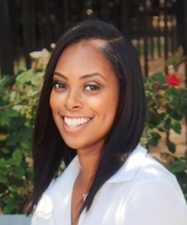
Natacha Delva, LSW
Therapist · NJ Licensed
Specializes in couples and relationship work, including infidelity recovery. Weekend availability.

Alayne Brady Jacobs, LSW
Therapist · NJ Licensed
Specializes in couples therapy, infidelity recovery, and individual work.

Robert Jenkins, LCSW
Senior Therapist · NJ Licensed
Specializes in couples therapy, discernment counseling, and individual therapy.
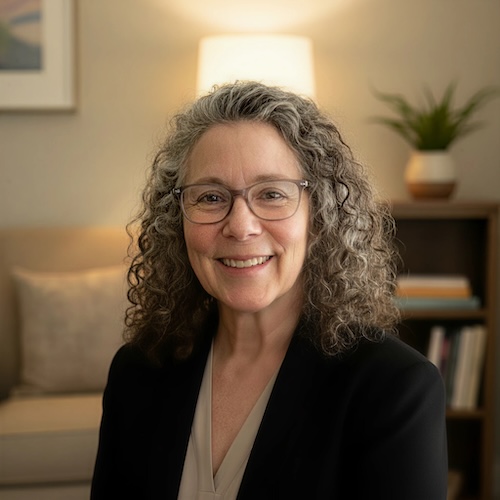
Debra Feinberg, LCSW
Founder & Clinical Director · NJ Licensed
Oversees clinical care and matches new couples with the right therapist on the team.