
What Makes Couples Thrive in Counseling? Key Ingredients for Success

By Debra Feinberg, LCSW, Robert Jenkins, LCSW (Reviewed by Senior Level Therapists)
Every relationship journeys through challenges, but have you ever wondered why some couples emerge from therapy stronger and more deeply connected, while others find it hard to create real change? Not all couples therapy journeys look the same—there are certain mindsets and habits that set successful couples apart. If you and your partner are considering counseling, understanding these factors can help you make the most of your experience.
Success Story:
“We struggled for years to communicate and found ourselves drifting apart after having kids. Maplewood Counseling gave us the support, understanding, and tools we needed to reconnect. We now listen to each other in a way we never did before, and our family is stronger for it.” — J. & N., Maplewood, NJ
Learn more about our approach to couples therapy
At Maplewood Counseling, we want you to know that personal growth—and healing together—is possible when both partners are invested. We offer a safe, non-judgmental space, but it’s the joint commitment to the process that turns this support into real progress. Below, discover what makes some couples especially successful in counseling and how you can apply these practices to your own relationship.
The Key Success Factors: What Sets Succeeding Couples Apart?
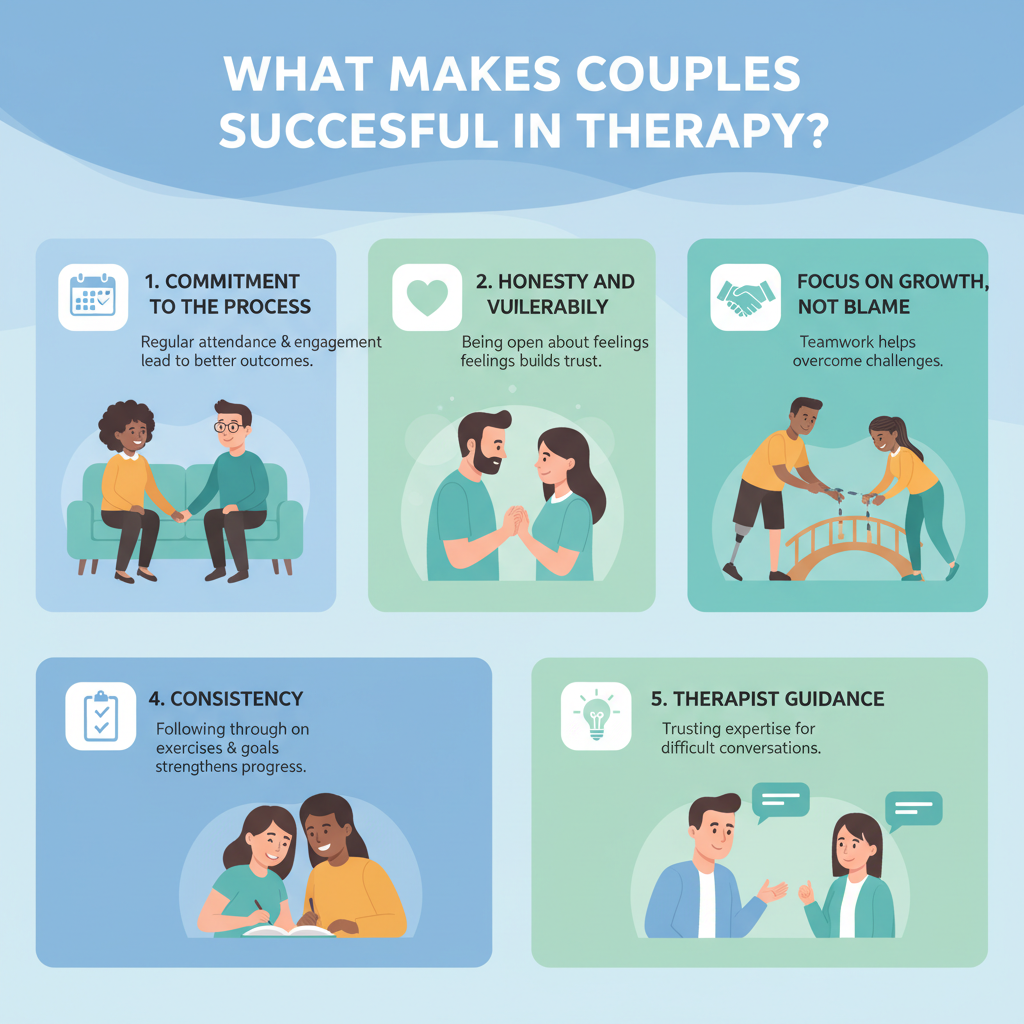
1. Commitment to the Process
The most successful couples approach therapy as a team effort, attending sessions regularly and being open to the journey—even when it gets uncomfortable. Change doesn’t happen overnight, but persistent effort is a game-changer.
- Therapist Insight:
“Couples who show up, even when it’s hard, demonstrate to each other that the relationship is a priority,” shares Our Therapists. “These are the pairs who often experience the most meaningful progress.”
2. Honesty and Vulnerability
Real growth happens when both partners are honest—not just about the relationship, but about their own feelings, responsibility, and needs. Vulnerability paves the way for deeper understanding and genuine reconnection.
- Therapist Insight:
“The willingness to share fears, doubts, or even moments of shame opens the door to compassion and empathy,” says James O’Neill, LCSW.
3. Consistency
Consistent attendance and follow-through—from showing up to sessions on time to completing take-home exercises—keep momentum strong. Couples who treat therapy like building a new habit get the most out of the process.
- Practical Tip:
Schedule sessions at times you can consistently attend and set reminders to complete any in-between session tasks together.
4. Focus on Growth, Not Blame
Progress accelerates when the focus shifts from “Who’s at fault?” to “How can we both grow?” Successful couples use what’s revealed in therapy to strengthen their partnership, not to assign blame or revisit old fights.
- Therapist Insight:
“Healing is about working toward mutual understanding, not keeping score. The most resilient couples remember it’s the two of you against the problem, not each other,” explains Debra Feinberg, LSCW.
Practical Tips: How to Maximize Your Success in Couples Counseling
- Set Clear, Shared Goals: Before your first session, discuss what each of you hopes to achieve and revisit these goals regularly. See what to expect in a session
- Prepare to Be Uncomfortable: Sometimes sessions can surface old wounds. Remind yourself that discomfort often signals growth.
- Practice Between Sessions: Try out communication tools or empathy exercises at home, not just in therapy.
- Ask for Feedback: Don’t be afraid to ask your therapist for ideas or clarification.
- Celebrate Small Wins: Acknowledge each step forward, no matter how small—it fuels motivation to keep growing.
Addressing Common Challenges
Even couples committed to change will hit stumbling blocks along the way. Here’s how to work through the most common ones:
- One Partner Feels Less Engaged:
Start with an open conversation about what each of you wants from therapy. Sometimes sharing anxieties can help bring more buy-in. - Struggling with Vulnerability:
It’s normal to feel nervous about sharing. Remember, therapy is confidential and judgment-free. - Doubts About Progress:
Growth is often gradual and non-linear. Regularly revisit your goals with your therapist to check in on your progress together.
Quick Self-Assessment: Are You Ready for Therapy?
Take a moment with your partner to reflect:
- Are you both willing to attend sessions and be open to new ideas?
- Can you commit to small changes, even if they feel awkward at first?
- Are you ready to place growth above winning past arguments?
If you answered “yes,” you’re already on the path to successful couples therapy.
Frequently Asked Questions About Making the Most of Couples Counseling
What actually happens in couples counseling?
Therapists facilitate honest, empathetic conversations, help you recognize and shift negative dynamics, and guide you toward more constructive patterns.
See what to expect in a session
How long before we see results?
Each relationship is unique. Sometimes shifts happen in a few sessions, while bigger patterns may take months. The key is consistency.
What if my partner is hesitant to participate?
It’s normal for one person to need more time. Start by discussing shared goals and listen to each other’s hopes and concerns. If you need support, our therapists are experienced in helping both partners feel heard and respected.
Can therapy help after infidelity or major betrayal?
Absolutely—if both partners are willing to work through the pain honestly and with an open mind, therapy can lay the groundwork for rebuilding trust.
Learn how infidelity counseling works
Are virtual sessions as effective as in-person?
For many couples, yes. We offer secure, flexible virtual sessions so you can prioritize growth from anywhere.
Meet Our Therapists
At Maplewood Counseling, our experienced team is dedicated to empowering each couple’s unique journey.
Flexible Therapy Options for Northern New Jersey Couples
We recognize that each partnership has different needs:
- In-person sessions in the calm of our Maplewood, NJ office
- Virtual therapy for clients in Short Hills, Newark, Millburn, Summit, Union, Springfield, and South Orange
- Evening and weekend appointments for busy schedules
No matter your location or lifestyle, we make quality support accessible.
Ready to Invest in Your Relationship’s Success?
You have the power to make your relationship stronger—starting today. Embracing therapy as a team, staying honest and open, showing up consistently, and focusing on mutual growth are steps that set you apart.
Let us support you in building a relationship founded on understanding, trust, and lasting love.
Helpful Resources
-
Couples Counseling Guide
Get an in-depth overview of what to expect in couples therapy, including how it works, common goals, and tips for success. -
Why Couples Drift Apart & How Counseling Helps
Discover the hidden causes of relationship drift and learn actionable steps to reconnect. -
Communication Breakdowns in Relationships: Guide to Reconnect
Discover the causes of communication breakdowns—from misunderstandings to emotional regulation. - Couples Therapy Near Me: Expert Care in Maplewood, NJ
-
Rebuilding Trust After Betrayal
Explore steps to rebuild trust and heal your relationship after infidelity or other breaches of trust.